Sunday, 10 November 2019

Remembrance Sunday

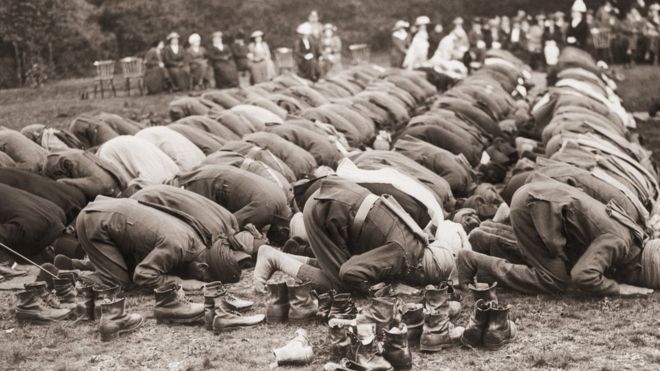
Indian troops serving with the British Army pray outside the Shah Jahan Mosque in Woking, Surrey.
https://www.bbc.co.uk/news/uk-46124467

People across the UK will hold a two minute silence this weekend to remember all those who lost their lives in World War One and all wars around the world. World War One lasted from 1914-1918 and ended at 11:00 AM on 11th November 1918. The photo shows Indian troops serving with the British army praying outside a mosque in Surrey during the war.

It is estimated that 1.5 million Indian troops fought with Britain in World War 1, and 400,000 of those were Muslim soldiers. Recent research shows that over 4 million Muslims either fought or served as labourers during the war. But another survey shows only 22% of people in Britain knew that Muslims had fought in the war.

Today many historians are trying to make sure people know about everyone who fought and died in the war. Historian Steve Ballinger says, "Finding out that Muslim soldiers fought and died for Britain to protect us and protect the freedoms we enjoy today, that's an important history for everyone to know."

What do you see in the picture?
where is it ?
do you think it looks like an old picture? how can you tell?
what are they doing, who are they?

explain the picture

- what is Remembrance Sunday?
-why do we have Remembrance Sunday?
- World War One ended over 100 years ago, why do we remember it, why don't we just move on?
- what is the two minute silence for?
- who fought in World War 1?
- In the photo there are lots of people in the background watching the soldiers pray; what do you think they are thinking?
- why do you think some people today forget the soldiers in the war were diverse?
- "It's important history for everyone to know," why?
- what can we learn from the soldiers of World War One?
- why is this story about No Outsiders?

No Outsiders in our school: Teaching the Equality Act in Primary school by Andrew Moffat

Reclaiming radical ideas in schools: Preparing young children for life in modern Britain by Andrew Moffat

Use this book to explore Remembrance day further.


Saturday, 9 November 2019

zebra

Tira walks through Kenya's Masai Mara National Reserve with her mother in a recent photograph.
https://www.nationalgeographic.co.uk/animals/2019/09/rare-polka-dotted-zebra-foal-photographed-kenya

Masai Mara National Reserve in Kenya has lots of animals including zebras. A baby zebra has been born who is a bit different to other zebras; this zebra has spots instead of stripes. The picture shows the baby zebra walking with its mother.

The zebra is making national news. It is not the first time this has happened but it is very rare. Life might be a little more difficult for the zebra, for example it may attract more flies as they don't like stripes but won't be put off by this spotted skin. Also the zebra will stand out from other zebras, making it more noticeable to predators.

However, research in South Africa found that in other cases where zebra's looked different, they were accepted and they lived happily with the herds.

what do you see in the picture?
where is it taken?
what is similar about the two animals, what is different?

explain the story

- what does a zebra usually look like?
- what is different about this baby zebra?
- has the mother abandoned her baby because it is different? why not?
- what does this show us about the mother zebra?
- do you think the other zebras will accept this different zebra?
- should the zebra try and grow some stripes?
- what would you say to the zebra?
- what can we learn from the zebra herd in this reserve?
- what can we learn from this zebra?
- why is this story about No Outsiders?

No Outsiders in our school, teaching the equality act in primary schools by Andrew Moffat

Reclaiming radical ideas in schools: preparing young children for life in modern Britain by Andrew Moffat


Sunday, 3 November 2019

inclusive football


https://www.huffingtonpost.co.uk/entry/manchester-city-football-club-sensory-room_uk_5da59158e4b01c76560c705a

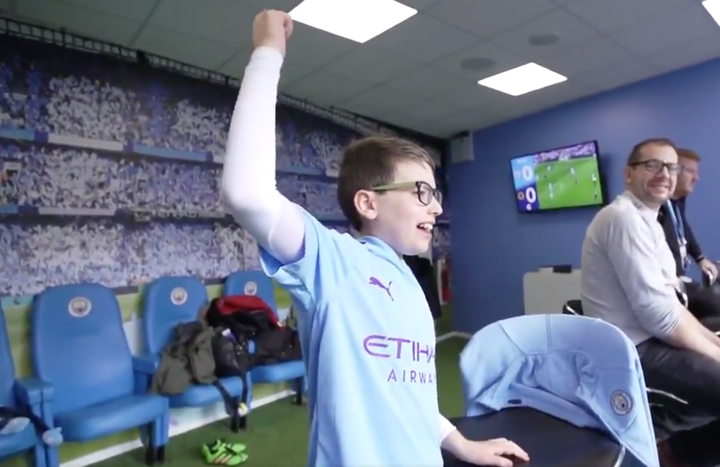
Manchester City Football Club have opened a sensory room at their stadium for fans with autism. The room is for families during matches and is designed to help all people access the game, even if they struggle with crowds or loud noises. The room was built using feedback from families who need it to attend matches.

The room has a view of the pitch, a quiet space away from the pitch and a dark sensory room with toys. The club says, "Opening this space is a big step for us to continue our long-standing mission of ensuring football is inclusive for all."

After the announcement, one parent on twitter said, "Sat trying to hold back tears  on the train home from work here. The possibility of finally taking my son to a match is incredible. What a club!"

Many parents of children with autism have supported the room and added stories of their own:
"Amazing news! We can hopefully all now come as a family to watch games as my autistic son struggles with sensory issues and often hasn't coped at games he has managed to attend. Thank you."

"I support Liverpool. I was born with autism so I can appreciate how good a move this is. Well played!"

"Great news. It's my dream to take my daughter to Bramall Lane, but it's doubtful."

What do you see in the picture?
Where is it?
what is happening?

- what is autism? ((I asked a child with autism how to describe what autism means. Oliver told me, "autism is your brain wired differently so you see the world in a different way. It' just a different view of the world." Oliver says some things are harder for him but but also he better at some things than other children.)
- why do you think some children with autism struggle at football matches?
- why do you think Manchester City Football Club have built this room?
- why did they use feedback from families who might use the room, why didn't they just build it themselves?
- "Our long standing mission of ensuring football is inclusive for all" what does this mean?
- why is a parent crying on the way home form work after reading the announcement?
- why do you think the other parent says it's "doubtful" that they can take their daughter to Bramall lane?
- what can we learn from Manchester City Football Club?
- why is this story about No Outsiders?

No Outsiders in our school: Teaching the equality act in primary schools by Andrew Moffat

Reclaiming radical ideas in schools: preparing young children for life in modern Britain by Andrew Moffat


Trick or Treat

4bb539dcea6e991c81ca55529f2f8689-1572524734224.jpg
https://megaphone.upworthy.com/p/nursing-homes-trick-or-treating?fbclid=IwAR2PsnCCFqpUr4ADp2Udfuek2bEUlBuytaAQMDE5aIBT0BzG_qs0ydUO5wo

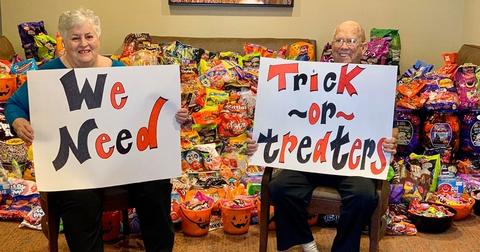
Nursing homes in the USA asked for families to visit them over Halloween this year for Trick or Treat. Residents saved up chocolate and sweets to give to children who visited. Many of the residents had not been visited for Trick or Treat for a long time, one said she has not had a Trick or Treat visit for over 30 years.

A recent study showed one in three seniors in the US felt lonely. Feeling lonely increases the risk of illness among elderly people.

The director of a nursing home in Utah said, "With you coming through that door you bring that youth with you and they become kids again."

What do you see in the picture?
where are they?
what is happening?

- what is Trick or Treat?
- Who usually takes part in Trick or Treat?
- Why do you think the people in the photo are asking for trick or treaters?
- why has the resident waited 30 years for a trick or treater?
- why are children not visiting the elderly residents?
- ""With you coming through that door you bring that youth with you and they become kids again." what does this mean?
- why do you think so many elderly people feel lonely?
- why is this story about No Outsiders?

No Outsiders in our school: Teaching the Equality Act in Primary Schools by Andrew Moffat

Reclaiming radical ideas in schools: Preparing young children for life in modern Britain by Andrew Moffat

Saturday, 26 October 2019

hijab huddle

Image result for football players huddle hijab
https://www.independent.co.uk/sport/football/news/football-hijab-women-soccer-jordan-shabab-al-urdon-club-amman-club-a9170286.html?fbclid=IwAR1UZKUqWCTd019I1CLug29gfurMjXlRU2Us89b39hTilZEysK685CB1ebU

A football match in Jordan was stopped mid-game when the hijab slipped of the head of one of the players. Instead of playing on, the opposing team (who were not wearing hijabs) stopped to surround their opponent so she could fix her hijab before playing on, They made a protective huddle around her for 30 seconds.

A video of the incident has been shared online over 4 million times and people across the world are praising the team for their humanity.

Until 2014 women Fifa did not allow player to wear hijabs but the ban was overturned and the first hijab was worn in a Fifa match in October 2016.

What do you see in the picture?
where is it?
What is happening?

Explain the story

- what is a hijab? (a hijab is a head covering that some Muslim women choose to wear in public)
- why is the football player wearing a hijab during the match (because the match is in public and she chooses to)
- when the hijab slipped off how do you think the football player felt?
- why didn't the opposing team take advantage and tackle her while she fixed her hijab?
- why huddle around her?
- we can see in the picture that the opposing team are not wearing hijabs, so why worry about protecting someone who is?
- how do you think the player felt when the opposing team huddled around  her?
- Fifa used to ban the hijab on the field; why do you think they changed their mind?
- what does this show about ideas and traditions? (they can change)
- why has this story gone viral? What does this show about how people around the world feel about diversity and difference?
- Why is this story about No Outsiders?

No Outsiders in our school: Teaching the equality act in primary schools by Andrew Moffat

Reclaiming radical ideas in schools: Preparing young children for life in modern Britain by Andrew Moffat

Saturday, 19 October 2019

different arms

Image result for carson pickett joseph tidd
https://www.washingtonpost.com/lifestyle/2019/07/24/boy-with-one-hand-met-soccer-player-with-same-limb-difference-photo-went-viral/

Joseph Tidd is a one year old soccer fan living in  Florida. Carson Pickett is a soccer player and the two have something else in common; they both have a different left arm.

When Carson heard Joseph's family cheering her on at a match, she ran over and repeatedly touched Joseph's arm with hers. It took a minute for Joseph to realise they had the same arms, then Joseph shrieked with glee. Joseph's Mum says he spent the whole car ride home looking at his arm and giggling; Mum says this is because "he knew he had a friend."

Mum says Joseph is fine about having a different limb. Kids used to grab his arm to look at it and he was confused about this, but his older sister told him he had a "lucky fin" like the character in the
movie Finding Nemo.

Joseph's parents want other kids with different limbs to know, "although they may do something differently from others, they should take pride in who they are."

What do you see in the picture?
where are they?
how are the two people different and how are they the same?

- In what ways do you think Jospeh is the same as all the children in his class?
- in what way is he different?
- why do some children grab his arm? Are they being nasty?
- how do you think it makes Jospeh feel when children grab his arm?
- why do his sisters call it a lucky fin?
- Joseph's parents could buy him a longer sleeved shirt to hide his arm, why don't they do that?
- why do you think Josesph's family wanted him to meet Carson?
- "It took a minute for Joseph to realise they had the same arms" why didn't he notice straight away?
- why was he so happy?
- how do you think Carson felt?
- Carson is a soccer player- what does this show about disability in sport?
- "although they may do something differently from others, they should take pride in who they are." what does this mean?
- what can we learn from Carson?
- what can we learn from Joseph?
- why is this story about No Outsiders?

No Outsiders in our school: Teaching the Equality Act in primary schools by Andrew Moffat

Reclaiming radical ideas in schools: Preparing young children for life in modern Britain by Andrew Moffat

Sunday, 6 October 2019

inclusive dolls

dolls-1569939693253.jpg
https://megaphone.upworthy.com/p/teacher-hearing-aid-dolls?fbclid=IwAR1eM5rhb3gzxl59vZ4bAEu4OCQUQWOkbnSC-S3mCuvydTUBtrb7f5GIZkc

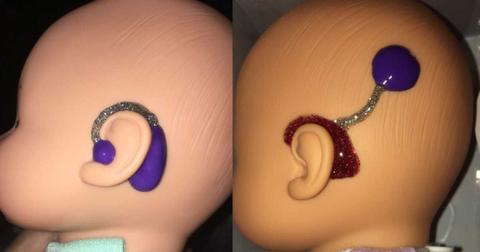
A teacher is adapting dolls so that children who are deaf and hard of hearing can find toys that look like them. Genesis Politron says, "I teach pre-school and kindergarten for deaf / hard of hearing kids and my students never see toys that resemble their hearing devices (hearing aids / cochlear implants) so I added some to our new baby dolls myself. I wish everyone could see their faces playing with these"

People on twitter are praising the teacher; one said. "It's amazing she's exposing these kids to  knowing it's ok to be differently abled." Another described seeing the faces of her friends' children who were deaf "light up" when they were given dolls with hearing aids.

What do you see in the picture?
what are they?
why might someone put hearing aids on dolls?

- what are dolls for?
- why do children like playing with dolls?
- have you ever seem a doll with a hearing aid? Why do you think we don't see dolls with hearing aids?
- why do you think the teacher chose to do this?
- why do you think her students loved the dolls?
- the teacher has made the hearing aids very colourful - why do you think that is? Why didn't she make them flesh colour?
- are these dolls only for children who are deaf or hard of hearing?
- What does "differently abled" mean?
- in what other ways are we differently abled in our school?
- what can we learn from this teacher?
- why is this story about No Outsiders?

No Outsiders in our school: Teaching the equality act in primary schools by Andrew Moffat

Reclaiming radical ideas in schools: preparing young children for life in modern Britain by Andrew Moffat


-