Sunday, 16 July 2023

World Cup


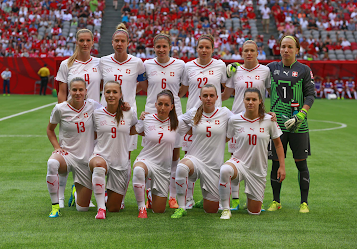
What do you see in the photo? What event is coming up? Which country is this?

The Fifa Women's world cup starts on July 20th.

An advert has been released in Switzerland to announce their players in the women's world cup squad. In England, the women's team are known as The Lionesses, in Switzerland they are known as The Nati. The advert has made the news and people are calling it "perfection", "iconic", "wholesome", "unique".

The ad is in the link above or on youtube here. Before watching it, ask children to consider how they would announce the team in an advert. There is clearly something different about this ad, which is why it is getting so much attention; what do you think Switzerland have done differently? How can you make an announcement interesting? Any guesses what we are about to see? Discuss and feedback.


- "perfection", "iconic", "wholesome", "unique" why do you think these words are being used?
- Someone was given the job of making this advert. They must have pitched the idea and convinced the football league in Switzerland to give them the job. You could argue an advert showing a family sitting around a dinner table has nothing to do with the world cup... how do you think they pitched it? 
- why not have fireworks, balloons, loud music, have the team revealed one by one, running on waving and crowds cheering? Would that not be a better idea for an announcement?
-what do you think the idea behind the advert was? Dad says, "Ahh the Women's team.. does anyone even know them?" Why does he say that? What are they showing about young people and adults, and  attitudes towards football, and gender?
- do you think the advert works? why? (or why not?) 
- what is the point of an advert? (to be noticed) Has this advert been noticed around the world? So has it worked? 
- This advert from France is very clever. Watch it and discuss what is going on here, what were Orange trying to show? What makes this a good advert? https://www.youtube.com/watch?v=QVNZRHIZVL8
- What can we learn from these adverts? 
- Is this about No Outsiders?


football


Start by showing the top picture and asking, what do you see in the picture, what do you think this story is about? Explain Amelia is 10 years old and lives in Merthyr Tydfil in Wales. She has become very good at her favourite sport and here she is with a medal. Ask the children to guess which sport Amelia is good at.

Then show the second picture, what sport do you think it is now? (children may guess football straight away using the top picture; it will be interesting to see whether gender stereotypes still exist and whether football is mentioned as a possibility from children before they see the second picture.)

Amelia loves football and plays for her local team. She practices every night after school so she has become very good. So good in fact, that she has scored 143 goals this season in games across South Wales.

Her coach takes her off the pitch for the second half of every game to give the other players a chance. Amelia has usually scored 10 goals by the end of the first half. 

Amelia's aim is to play for Wales and Liverpool and her role model is Liverpool striker Mo Salah.

- Did children guess that the sport was football after the first picture? If not, ask why children did not guess football, what is a gender stereotype? (if children did guess football, use that to praise the children for their non-judgement and their challenging of gender stereotypes. What are gender stereotypes?)
- Why does Amelia's coach take her off at half time?
- Do you think that is the right decision? What are the arguments for and against this decision?
- How do you think Amelia behaves when she is sent off the pitch? She has done nothing wrong yet she is being sent off! How would you feel? Do you think she argues? Explain your answer?
- What makes this story interesting? Is it interesting because Amelia has scored 143 goals, is it because  Amelia has to be sent off at half time, or it is interesting because Amelia is a girl? Someone decided to make this a news story; why do you think this made the news? 
- What can we learn from Amelia?
- Why is this about No Outsiders?


Sunday, 2 July 2023

Wonder Woman


A photo has gone viral in the last week showing a little boy excited about a new super hero costume given to him by his parents. In the video, a father gives his son the Wonder Woman costume and the boy asks, "Is that a dress?" Dad replies, "It's the dress you like of Wonder Woman." The boy smiles and puts on the dress, saying, "You bought it for me, thank you!" He then hugs and kisses his dad.

The boy then goes to his mum, who is recording the video, and says, "Thank you so much, Mum!" and Mum replies, "You're welcome, my love." The boy then twirls around and shows his parents Wonder Woman poses.


The video gained lots of attention on social media with comments about the way the parents are bringing up their son.

"This is a good reminder to anyone who dresses what society would say is "different|" from their gender. Forced gender roles are not natural. The parents did a great job raising a kid who wants to wear what they want."

"This is a happy kid and these are some good parents."

"This is good parenting. Whether or not you fully understand your children, let them be happy in their own way."

"This is the sweetest thing I've seen all day. Clothes don't have gender. These are very good parents."

- What is Wonder Woman?
- When the boy first opens the costume and holds it up, he asks, "Is that a dress?" Why do you think he asks that, what is he thinking?
- Do clothes have gender? What does that mean?
- The boy sounds surprised that Dad bought the dress for him; why?
- "Is that a dress?" We don't know how old the boy is, but he looks very young. Has the boy learned, even at this age, that clothes have gender? Where has that learning come from?
- Look at his face when he hugs his dad, why is he so happy? Is he happy because of the dress, or is he happy because he is given permission by dad to wear the dress? What's going on here?
- Do you think the parents decided Dad should be the one to give the dress to the boy, rather than Mum? Why do you think they chose to do this? (or maybe it wasn't like that, maybe they never thought about it... what do you think?)
- Mum says, "You're welcome, my love." By choosing those words, what is Mum showing her little boy?
- Why do you think the story went viral?
- why are so many people saying this shows good parenting?
- Is the story about the boy wearing a dress or it is about good parenting? Which is more interesting?
- "Forced gender roles are not natural" What does this mean? Do you agree?
- What can we learn from this boy?
- What can we learn from these parents?
- Why is this about No Outsiders?


Saturday, 24 June 2023

Beach


https://scoop.upworthy.com/greece-makes-beaches-wheelchair-friendly-in-historic-move?fbclid=IwAR2d_VeNPPsNhvN_TunK0SRB6r-DYCy59lTziqr71t_FW5mXJVC8R7uZEH8

This summer has made hundreds of its beaches wheelchair friendly for the first time, installing remote- operated ramps built by a company called Seatrac. The minister for tourism, Vassilis Kikilias, said, "Equal access to the sea is an inalienable human right."

"People with disabilities and people with limited mobility are given the opportunity to participate in beach activities with family and friends, enhancing the quality of life for everyone."

"I like that wheelchair users can use Seatrac independently without needing assistance."

Greece has a history of making places accessible. The government were criticised by some for installing concrete paths around the ancient Acropolis temple in Athens. An archaeologist called the move, "a crime to wound the rock because it's a monument." But the culture minister at the time responded, "Giving joy to people is perhaps just as significant as the protection of our cultural goods. I have seen people in wheelchairs who came up for the first time and felt happy. The disabled, the elderly, people with various problems have the right to see and admire up close the Acropolis monuments."

There is a video in the link above showing how the ramps work.

 - Where is Greece?
- Why might someone using a wheelchair struggle at a beach?
- What does accessible mean?
- Looking at the picture, how do you think the ramp works? 
- "enhancing the quality of life for everyone" what does this mean?
- Maybe a beach is not a good place for someone using a wheelchair? What would you say? (encourage children to challenge that view. People should be able to go where they want.)
- 'Disabled' or 'Differently abled'... does language matter?
- There is some interesting language used in the quotes from ministers; "People with disabilities and people with limited mobility"; "The disabled, the elderly, people with various problems" what does this language suggest about attitudes towards people who are differently abled?
- What can we do about that?
- Is our school accessible? 
- What can we learn from this story?
- Why is this about No Outsiders? 


Sunday, 18 June 2023

Lord Mayor


History has been made in Birmingham as the city has elected its first ever British-Indian Lord Mayor or the city. 

Chaman Lal, who is Sikh, was born in the Punjab in 1964 and came to Britain when he was 11 years old. When Chaman arrived in Birmingham aged 11, he did not speak a word of English but he says he was determined to discover and learn the language of his new country. He later studied economics and law and opened his own electronics business.

Chaman says he promises to be inclusive in his new role as Lord Mayor; "I want to be known, not as lord mayor of Birmingham, but as lord mayor for all the people of Birmingham."

"It is a very proud moment for me and our family, as the son of an army officer born in India, but made in Birmingham, I am an adopted Brummie and I never thought that one day I would become lord mayor of my adopted city."

In his speech, Chaman also thanked the inspirational women in his life; "As the saying goes, behind every successful man is a great woman, which happens to be true in my life, as I couldn't have made this achievement without the support of some very important women in my life."

- What is a lord mayor?
- Chaman came to England aged 11, what is the name for  a person who chooses to live in a different country from the one they were born in? (immigrant)
- What is a refugee? Was Chaman a refugee? What is the difference between a refugee and an immigrant?
- Chaman says he is an adopted Brummie; what does this mean? Encourage (without pointing anyone out) children to consider whether they can relate to Chaman in this way; have you travelled to live in a different town in your lifetime?
- "I never thought that one day I would become lord mayor of my adopted city." why not?
- Some people who don't understand about diversity and Britain in 2023, might say the position of  lord mayor of Birmingham should be given to someone who was born in Birmingham; how would you respond? 
- "I want to be known, not as lord mayor of Birmingham, but as lord mayor for all the people of Birmingham." what's the difference? What is Chaman saying here?
- "Behind every successful man is a great woman," is an interesting, old saying. Where do you think this originates, is it relevant in 2023? What is your response to this saying?
- What does this story show about Britain in 2023 and British values?
- What can we learn from Chaman Lal?
- Why is this about no outsiders?


www.no-outsiders.com 

Sunday, 11 June 2023

Beano


The Beano is celebrating Pride. The official Beano website has links to lots of different activities and information about celebrating Pride and understanding what it's about. There is a Pride quiz, "How to celebrate Pride at home" link and a pride flag quiz. 

Beano says on twitter, "Every kid has the right to see themselves in Beanotown... happy pride month to all."

- What is Beano? Who is it for?
- What is Pride, who is it for?
- Beano is aimed at kids; but is Pride an adult thing? Some people might say kids don't need to know about LGBTQ+ and Pride. How would you respond?
- "Every kid has the right to see themselves in Beanotown" what does this mean? We can't see ourselves in a comic, can we?
- what is representation?
- If you never see someone who looks like you in books, comics or films, what do you think the consequence is?
- In the picture, how are the characters celebrating pride?
- Do you have to be LGBTQ+ to celebrate pride?
- What can we learn from Beano?
-Why is this about No Outsiders? 


www.no-outsiders.com

Sculpture


"Seated" is a sculpture on Bexhill seafront, overlooking the English channel. Artist and creator Tschabalala Self explains, "It's about one's right to sit, one's right to claim space and time for themselves. And it's really about how even the most quotidian gestures can become politicised in one's identity politics through one's blackness."

What does quotidian mean? (ordinary, normal, "nothing to see here")
What do you think Tschabalala is showing people with her sculpture?

Last month vandals spray-painted the sculpture white. In response, the museum who owned the sculpture covered it from view.

A discussion emerged about how to respond to the vandalism. Tschabalala said, "That something as relatively innocuous as a sculpture of a woman in a sun hat and sundress, siting on a chair, can provoke this level of rage and animosity is, in my opinion, solely because the woman is black." 

What do you think the different options were for the museum after the vandalism? 

Some argued for an anti-racist protest.

Tschabalala argued the sculpture should be uncovered despite the vandalism. She felt the cover-up provoked more anxiety and fear. Instead, she suggested the museum asked the local community to help her restore the sculpture.

"I asked the museum to uncover the sculpture so everyone could fully absorb and digest what had happened, and to allow people to participate in the restoration of the sculpture... I felt like, at the end of the day, people would visually see how their actions were able to counteract this gesture of hate."

 What do you think happened next?

Over 300 people queued to help restore the sculpture. Tshabalala said, "Every single person that touched the sculpture, their had will forever be embedded in that artwork, and now the work is really owned by that community in a way that it never would have been if not for that incident.... it's truly a public art sculpture in a way I would never have imagined it to be."
 
Tschabalala said she felt the restoration was empowering for the community, who might have been scared or upset by the vandalism; "The sculpture has this immense power now because of this event - not because of the vandalism but because of the community restoration. It has been charged with all this energy from all those individuals who have now become part of the artwork"

"These are the dialogues I wanted to have, this is the kind of awareness that I wanted to bring around the unique experiences of black women and black bodies."

- What is a sculpture, what is art? 
- "It's about one's right to sit, one's right to claim space and time for themselves." what does this mean?
- "It's really about how even the most quotidian gestures can become politicised in one's identity politics through one's blackness." what does this mean? What are identity politics? 
- Why do you think the vandalism happened? 
- Tschabalala argues the vandalism happened because the woman is black; do you agree? (you could argue the vandalism happened because of racism; is that the same thing?)
- What do you think the person who vandalised the sculpture understands about diversity and living in Britain today; what message would you give to them?
- Some people agued for a protest; what are the arguments for and against that response to the vandalism?
- Why do you think Tschabalala argued for a community restoration?
- "I felt like, at the end of the day, people would visually see how their actions were able to counteract this gesture of hate." what does this mean? Would a protest have the same effect?
- over 300 people turned up. What does this show about the people living in that community?
- "Every single person that touched the sculpture, their had will forever be embedded in that artwork" - how? 
-"Now the work is really owned by that community" explain this
- what does empowering mean? How has the community been empowered?
- Tschabalala talks about wanted to have dialogues and to bring around awareness. Why do you think this is so important to her?
- Do you think the vandals might come back? How do we stop vandalism like that happening in the future? (education, dialogue, everyone understanding about diversity)
- if the vandals come back, Tschabalala could make the woman in the sculpture white, then they would leave it alone. Is that the answer?
- what can we learn from Tschabalala and from this story?
- why is this about no outsiders?
No Outsiders: everyone different, everyone welcome by Andrew Moffat

www.no-outsiders.com