Thursday, 3 January 2019

London is open

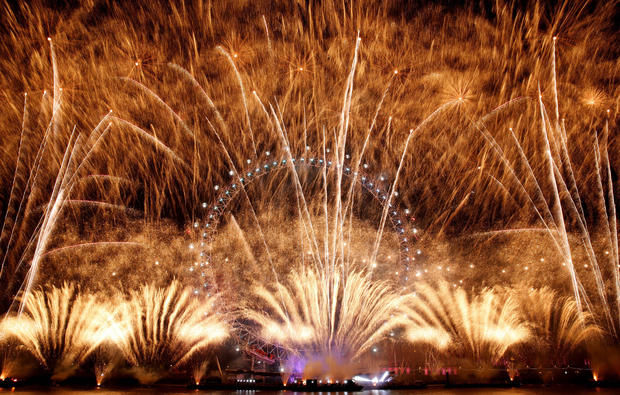
Fireworks explode around the London Eye during New Year's celebrations in central London just after midnight on Jan. 1, 2019.
https://www.cbsnews.com/live-news/new-years-eve-events-around-world-celebrations-fireworks-sydney-london-nyc-today-2018-12-31/

https://www.standard.co.uk/news/london/london-new-years-eve-2018-capital-welcomes-2019-with-spectacular-firework-display-in-the-heart-of-a4027816.html

Around the world on December 31st people celebrated the start of 2019. In London 100,000 people gathered together on the banks of the river Thames to bring the new year in. As the 12,000 fireworks exploded over the city, the words, "London is open" were spoken in seven languages as part of the display.

Music from across Europe was played during the show to celebrate London's diversity. London Mayor Sadiq Khan said "I'm proud that this year the millions watching around the globe will see us send a message of support to more than one million EU citizens who call London their home."

What do you see in the picture?
Where is it?
Why is it happening?

explain the story

- Who celebrates New Year?
- Why do people celebrate new year?
- There were 100,000 people celebrating together in London. We can't see the crowd in the picture; what do you think the crowd looked like? (diverse)
- Why do you think the organisers chose to use the words "Londond is open"?
- Why say the words in 7 different languages?
- What is an EU citizen?
- Why does the mayor want to send a message support to EU citizens living in London? What do you think the message is?
- What can we learn from London and this story?
- By saying London is open, who else do you think is welcome in the city? What other groups of people live in London and the UK - different faith, families (LGBT), disabilities, age, gender. What does the Equality Act 2010 say about different people being welcome?
- Why is this story about No Outsiders?

Note: use this link  https://www.theguardian.com/world/gallery/2019/jan/01/new-years-eve-celebrations-and-fireworks-around-the-world-in-pictures after your talk to reinforce the concept of different people all over the world celebrating the same thing regardless of race, religion etc

No Outsiders in our school: Teaching the Equality Act in primary schools by Andrew Moffat

Reclaiming radical ideas in schools: Preparing young children for life in modern Britain by Andrew Moffat


Wednesday, 2 January 2019

Gender Equality

Image result for linemen hazard sign
https://www.globalcitizen.org/en/content/new-zealand-sexist-road-signs-girl-letter/?fbclid=IwAR2wJaMyME63rps9aK02jjyx5v6vDSnvH5ROW-wBCK-M4Bq4Kc3upU7y8O8

Zoe Carew lives in New Zealand and is seven years old. On the way to visit her grandma she spotted a hazard sign warning people there were electricians working overhead. The electricians are called Linemen.

Zoe felt there was something wrong with the sign and wrote to the head of the New Zealand Transport agency . In her letter she wrote,
"I wondered why it said "MEN" when women can be line-workers too. I don't really want to be a line-worker when I grow up because there are so many more exciting things I would like to do, but some girls might want to learn to be line-women. Why does the sign say "Linemen" when the people working on the lines may be men or women? I think the sign is wrong and unfair. Do you agree?"

The transport agency agreed with Zoe and have announced they will change all the signs. Posting on twitter, they said, "We were happy to take Zoe's suggestion on board because great ideas can come from anyone, including seven-year-olds! Good on you, Zoe!"

What do you see in the picture?
Do you recognise the country?
What does the sign mean?
What do you think the story is?

Explain the story

- Where is New Zealand?
- Why did Zoe say the sign was wrong?
- Why do you think the sign says "Linemen"?
- What is gender equality?
- How has gender equality changed?
- Why do you think the transport agency decided to listen to the views of a seven year old?
- What does this tell us about people around the world and how they see gender equality?
- What law do we have in the UK that protects people of different gender? (The Equality Act 2010)
- Why is this story a good example of Pupil Voice?
- What can we learn from Zoe?
- What can we learn from the transport agency?
- Why is this story about No Outsiders?

No Outsiders in our school: Teaching the Equality Act in Primary Schools by Andrew Moffat

Reclaiming radical ideas in schools: Preparing young children for life in modern Britain by Andrew Moffat


Saturday, 15 December 2018

Football fans

Soft Toys
https://www.itv.com/news/2018-08-20/dutch-football-fans-throw-cuddly-toys-to-sick-children-at-feyenoord-match/

Feyenoord, a football team from The Netherlands invited patients from a children's hospital to watch a home game on a Sunday afternoon. The visiting team, Excelsior, heard about the children coming to the match and organised a surprise.

After finding out the children were sitting on a tier below them, the Excelsior supporters brought hundreds of cuddly toys with them and on a signal before the match, threw the toys down to the children. For a few minutes the sky was raining cuddly toys; the pitch and stands were covered in bears and zebras.

What do you see in the picture?
Where is the picture taken?
What do you think football fans might throw?
Can you see what is being thrown in this picture?

Explain the story

- Why did Feyenoord invite children from the local hospital to their match?
- Why did the football fans decide to give toys to children from the hospital?
- The football fans were form a different city; why didn't the football fans keep the toys and give them to children from their own city?
- What does this show us about football fans today?
- Who could have felt like outsiders at this match?
- How do you think the toys made everyone feel at the match?
- what can we learn from the football fans in this story?
- Why is this story about No Outsiders?

No Outsiders in our school: Teaching the Equality Act in Primary Schools by Andrew Moffat

Reclaiming radical ideas in schools: Preparing young children for life in modern Britain by Andrew Moffat


friendship

kamden-paul-wheelchair2
https://www.globalcitizen.org/en/content/boy-buys-new-wheelchair-best-friend/?fbclid=IwAR39tB1271LflXXGfRMscqIaVYWc4WcLNaRVXujNywE55r9i1RidjQcCjgw

Kamden and Paul are best friends; they both love superheroes and meet up to watch videos. Kamden uses a wheelchair and one day Paul was horrified when he saw his friend's chair tip up and Kamden fall out.

The problem was Kamden had grown too big for his chair, but his family could not afford to buy a new one. Paul said, "His wheelchair has fallen forward so many times and that sucks. Also he has a really hard time pushing it because it's so heavy."

Paul decided he needed to help his friend so he investigated ways to raise money. Paul asked his Mun to set up a Go Fund Me page to raise $3900 for a new chair. In 26 days the page had raised $5935!

Kamden's mum said, "What really contributes to their friendship is that Paul does not see Kamden as someone who has a disability. He sees him as Kamden. Because of that, Kamden truly is himself around him." Paul never acted as though his friend was different.

What do you see in the picture?
How are the children different?
How are the children similar?
How can you tell they are friends?

Explain the story

- Why did Kamden fall out of his wheelchair?
- What do you think Paul did when his friend fell out of his wheelchair? What do you think Paul said to Kamden?
- Why do you think the fundraiser raised so much money so quickly?
- Where did that money come from?
- What does that tell us about people around the world today and attitudes toward disability?
- Kamden's Mum says, "Paul does not see Kamden as someone who has a disability", what does she mean?
- Who could have been an outsider in this story?
- What happened to make sure that person was not an outsider?
- What can we learn from Kamden and Paul?
- Why is this story about No Outsiders?

No Outsiders in our school: Teaching the Equality Act in Primary Schools by Andrew Moffat

Reclaiming radical ideas in schools@ Preapring young children for life in modern Britain by Andrew Moffat

Saturday, 1 December 2018

food bank

Trolleys
https://www.bbc.co.uk/news/uk-england-46388211

People across the UK have responded to a social media campaign to support food banks over Christmas, started by a member of a traveller community in Durham. Watson Harrop is a proud Gyspy living in Durham and he asked his friends to film themselves filling up their trolleys with food bank donations. Many people took up the challenge, which has now gone worldwide.

Watson says, "The concept is quite simple. People film themselves with their food bank donations and challenge friends to do the same on social media." Its irrelevant how much people spend,
"If someone buys ten tins of beans for £2 that is good enough."

Food banks around the UK are reporting a huge intake. A food bank in Darlington said the amount of donations were a miracle of Christmas; "I've never seen anything like it! I was speechless!"
Food banks in Coventry and Stratford were also stunned. Watson's local food bank has enough food to last till July.

What do you see in the picture?
What do you think is happening?

Explain the story

- What is a food bank?
- How do food banks get food?
- Why do you think so many people are giving food?
- When people give food do they know who is going to eat it? Is there a "Christian" section, a "Muslim" section? A section for people of different race, or language? Why not?
- Are the people who donate to food banks bothered about who gets to eat their donation?
- This challenge has gone viral, what does this show about people in the UK today and their attitudes towards different people and people who need help?
- Watson is from the traveller community; why didn't he set up a challenge just to help other people in the traveller community? What does this show about Watson?
- What can we learn from Watson?
- Why is this story about No Outsiders?

No Outsiders in our school: Teaching the Equality Act in Primary Schools by Andrew Moffat

Reclaiming radical ideas in schools: Preparing young children for life in modern Britain by Andrew Moffat


racist graffiti

The racist graffiti was altered for a more positive message (Twitter)
https://inews.co.uk/news/walthamstow-racist-sign-graffiti-transformed-diversity-local-artist/

Racist graffiti found in London this week was transformed in to a celebration of diversity by an artist. The sign originally said "Speak English" but when local artist Chris Walker saw it he added, "we" and then listed a huge range of other languages spoken in the area- Lithuanian, Panjabi (spelled incorrectly), Bulgarian, French, Turkish, Urdu, Tamil, Polish, Romanian, Cockney, French.

Chris posted the sign on twitter saying, "I can only assume our local 'artist' was spooked before he could finish his masterpiece, Allow me to finish it for you."

Chris said he wanted his altered sign to point out "The area's diversity is what makes it so great."

"I saw they'd left me quite a bit of space around their 'artwork' so I thought I'd fill in the blanks."

What do you see in the picture?
What is the sign about?
Why do you think the handwriting is different for English and the other words?

explain the story

- why do you think someone chose to write "Speak English" on a fence? (some people don't understand about No Outsiders yet; some people are scared of difference including hearing language they don't understand. Some people think their city is better with one kind of language, one kind of skin colour, one kind of faith; it's the opposite to what we know and what the artist Chris knows - our city is brilliant because of the different language, different race and different religion!)
- why do people say "Speak English" is racist?
- Why did Chris add "we"?
- Why did Chris add lots of different languages?
-Chris says "They left me quite a bit of space" and he, "filled in the blanks", "Allow me to finish it for you," what does he mean?
- Why didn't Chris just rub out the graffiti or paint over it?
- The new graffiti got lots of press attention and went viral on twitter - what does this show about people in the UK today and what they think about different language?
- What do you think the person who wrote the original words feels about the changes? How do we change attitudes towards difference when someone doesn't understand about No Outsiders?
- Why is this story about No Outsiders?

No Outsiders in our school: Teaching the Equality Act in primary schools by Andrew Moffat

Reclaiming radical ideas in schools: Preparing young children for life in modern Britain by Andrew Moffat


Sunday, 25 November 2018

Refugee store


Choose Love store has opened in Soho, London. In this store people don't shop for themselves, instead shoppers buy gifts for refugees.

The shop asks people to, "Shop your heart out and leave with nothing and feel the love." Shoppers can purchase sleeping bags, blankets and solar-powered lamps, also people can pay for legal advice, help with family reunions or mental health care.

This is the second year the shop has opened. Last year Choose Love raised £750,000 for refugees, paying for 800,000 meals and over 3000 nights of accommodation. 

What do you see in the picture?
Where are the people?
What is the shop called?
What do you think is sold in the shop?

explain the story

- What is a refugee?
- Why has the shop opened?
- Why is there a queue?
- Why does the shop say, "Leave with nothing and feel the love," why is the shop called, "Choose Love"?
- The shop raised £750,000 last year; where did that money come from?
- Do people buying gifts care about the race, religion or background of the refugees they are buying for?
- What do the people buying gifts care about?
- What does this show us about many people in the UK today and their attitude towards refugees?
-  What can we learn from the owners of this shop?
- Why is this story about No Outsiders?