Sunday, 17 July 2022

Remember


This photo was posted on social media by the Soul Sisters Memorial Foundation last month. They are a group who raise awareness of mental health. The image has gained hundreds of thousands of responses and people have been sharing their own experiences of random kindness.

Laura wrote, "To the lady who held my crying newborn in the Laundromat so I could get my washing done. I'll never forget you and your kind heart."

Kirsten wrote, "My car was stuck in the snow one night, a complete stranger came and dug my car out with his bare hands, gave me a pep talk on how to drive in the snow with confidence, then when my car started slipping again as I drove off, he walked between my car and parked cars using his arms to stop my car sliding in to parked cars. I will never forget how kind he was to me that evening."

Lisa wrote, "Bayshore Mall, Milwaukee, Wisconsin, I got so sick. A mum and her daughter were in the ladies room with me and checked on me. I've had the handkerchief the mom gave me for almost 40 years now. Grateful for their kindness, I've never forgotten it."

Steve wrote, "I was in third grade in Florida on a school bus. Just moved there. I sat next to a girl, she gave me some gum. She must have been in 6th or 7th grade. I am now 68 years old. I still remember this."

But random acts of kindness don't always go right. Zoe wrote, "A little old lady in Bundaberg, who I tried to help across the main road will remember me. She yelled at me and clouted me with her handbag!"

- What do you see in the picture, why has someone written this, what does it mean?
- are you more likely to be remembered for being kind? discuss
- what do the anecdotes show us about people around the world today?
- why do people often help strangers in need?
- Why has Steve remembered the girl who gave him gum 60 years ago? Why didn't the girl talk, why did she give him gum, what was the impact of that simple gesture?
- why has Lisa kept the handkerchief given to her 40 years ago by a stranger?
- what went wrong for Zoe and the "little old lady"? What mistake did Zoe make?
- How is this story relevant to Y6 children in our school today?
- Can anyone think of a time when someone in Y6 has shown kindness? Who will you remember and why?
- What can we learn from the picture and from these stories?
- why is this about no outsiders? (it's about no outsiders because in every story someone feels like an outsider and a stranger chooses to help)
- reflection- how do you think you will be remembered? 


www.no-outsiders.com

Sunday, 10 July 2022

sandwich


What do you see in the photo? What is a subway sandwich? What is that note about?

The note explains exactly what this story is about; AcBlaze suffers from anxiety and felt unable to go in to their subway to order a sandwich. They asked for help on "No stupid questions" which is an internet forum providing answers without judgment and the response was phenomenal; lots of people answered with clear instructions on how to order a subway sandwich.

Ask the children how they would answer, before reading the following response. Think about anything the server might say or do so that AcBlaze is as prepared as possible.

The top response was posted by Beyardo; their answer was clear and detailed and easy to understand:

They’ll ask you what you want. You’ll pick X meat on Y bread, either 6 or 12 inches. They’ll ask you what kind of cheese you want and then whether you want it toasted.

Then you’ll get to veggies and other toppings and they’ll just put on whatever you tell them to. Dressing/sauce too.

Once you’re done with the sandwich, they’ll ask you if you want it for here or to go and whether you want to make it a meal with chips and a drink. They’ll ring up your charges, take your payment, and away you go.

If there’s any concern about what you want, you can always google their menu in advance so you know exactly what you’re getting once you get in there.

Good luck!

Big in to science also posted a helpful tip:

It's good to stand back about 10 feet from the counter if you want to look at the menu there. That way they can tell you aren't about to order and are just looking. If they ask you "what would you like" or something like it, just say "I need a minute to decide", they won't mind.

Some people added instructions on which side to queue up on and to describe the different types of bread. 


Lots of people then posted to show support and encourage AcBlaze. One person wrote, "Not all heroes wear capes. Nice explanation."

Before long, AcBlaze posted an update: "I managed to go in just now. The sandwich was very nice. I rather suspect I'll be back to try more! Thank you all so much for your support. It means the world to me."

- what is anxiety, how does it affect people?
- What is it about a subway sandwich that affects a person with anxiety? How is this different from buying a sandwich in a supermarket?
- Why did so many people respond to AcBlaze and try to help?
- What does that show about most people today and how they will respond if you ask for help?
- who felt like an outsider in this story?
- what happened to make sure they were no longer the outsider?
- Do you think AcBlaze is the only person to experience anxiety like this? In the comments Zatopa wrote, "When I was a young adult I was terrified to order at a deli. All the choices were overwhelming, everyone was in a hurry, and I felt like such a rube not knowing what half the choices were. I missed out on the joys of good sandwiches for years because I didn't have somebody to give me a little simple prep.  " What does this show about many people around us today? Why don't more people speak up and ask for help?
- what can we do in our school to make sure people know they can ask for help?
- what can we learn from AcBlaze?
- why is this about no outsiders?


www.no-outsiders.com 


Sunday, 3 July 2022

Pride 2022


https://news.sky.com/story/london-pride-thousands-turn-out-in-force-as-the-capital-celebrates-50-years-since-the-first-march-for-lgbtq-rights-12644288

For this assembly I am providing a script: this is more or less how I will deliver this assembly this week. I will ask these questions, encouraging children to explore and debate answers, then follow up with my own answers. My answers are in italics.

What do you see in the picture? Where is it? What is happening?

The photo shows Pride 2022 in London, it was taken on Saturday afternoon at Piccadilly Circus.

What is Pride? 

Pride is a yearly event that enables LGBT+ people to walk together through the city where they live and say "Here we are! We are proud to be who we are, we are proud to be LGBT+" It's like a big festival, like a celebration of difference and diversity with a focus on LGBT+ people.

What does LGBT+ stand for?

Lesbian, Gay, Bisexual, Transgender. The plus means there are other people also and everyone should be included Often there is a Q there, which stands for Queer (different - some people don't want a label) or Questioning (I haven't decided what I am yet, I'm still thinking about it, and that's ok)

Do you have to be LGBT+ to go on a Pride march?

No, the march is for everyone who supports LGBT+ equality. Sometimes people call themselves an ally (ask what an ally is) - which means they are not LGBT+ but they support LGBT+ equality.

How many people do you think joined the Pride celebrations in London this year?

Over one million. What does that number show about LGBT+ equality and attitudes towards LGBT+ equality today in Britain?

Why is the event called Pride?

It is called Pride because the aim is for LGBT+ people to feel proud of the person they are. 

Why might a person who is LGBT+ not feel proud to be LGBT+?

People don't tend to worry about being gay, people tend to worry about homophobia, which might stop them feeling proud. 

What is homophobia?

Homophobia is a judgement of LGBT+ people that leads to treating that person differently. A bit like racism is a judgement of someone because of their skin leading to treating that person differently. A homophobic person would argue someone should not be gay and Pride should not happen.

Can a person who is LGBT+ stop being LGBT+? 

No. No one chooses to be LGBT+, it's just who they are. We all have differences, and being LGBT+ is just another way of being different. No one should stop being the person they are because of someone else's opinion.

What can we do about homophobic ideas?

We can make sure everyone knows at our school that they are welcome. If we hear homophobic ideas, we can challenge them. 

How can we challenge homophobia? What could you do if you heard someone use the word gay as a put -down at school?

Number 1- stand with the person being put down. Take them away from the situation if they are upset and find an adult. If you feel able to, ask the person making the put down what they mean? Ask why they say that? As them why they are being homophobic? Make sure the person knows you don't think it's funny and you won't join in. You should also let an adult know. 

What are British Values? Which British Value does this story fit in to?

British values are Democracy, Rule of law, Individual Liberty, Mutual Respect, Tolerance. I'll be discussing the use of the word "Tolerance" here; do we like the word tolerance? What does tolerance mean? (note: for some children, tolerance may be an entirely appropriate word; the aim of this assembly is not to force any child to "celebrate" Pride, rather I am teaching that Pride exists; some people will want to celebrate it and others may feel they are tolerating it... this is an interesting discussion to have in Y5/6. I'll be concluding that whatever your personal belief, whether you choose to go or not, Pride is an important event for a city to hold to make sure all people, whoever they are, know they are welcome. You may choose to never go on a Pride march but you wouldn't stop someone else from going on one.)

Why is Pride about No Outsiders?

It's about No Outsiders because pride makes sure everyone knows they belong.


I will show and discuss this video to Y4-5-6 children showing a Pride veteran meeting a person joining \pride for the first time. https://www.bbc.co.uk/news/av/uk-england-london-62011729

No Outsiders: Everyone different, everyone welcome by Andrew Moffat

www/no-outsiders.com

Sunday, 26 June 2022

Braids


On Saturday, BBC presenter Lukwesa Burak, presented the news. Later she tweeted:

"Thank you for all the messages and DMs. Yes I had braids while reading the news and yes, even on a National bulletin. Times have changed! Thanks again."

Many people responded to the tweet positively; within 16 hours the tweet had over 500 retweets and 17,000 likes. Here are some of the responses:

"You look amazing. If you hadn't said anything I'd have not batted an eyelid. Your hairstyle suits you. And you look fab!"
"Represent" clap emoji
"Happy dance here. There are some 8 year old girls in my class who will be seeing themselves represented today. You rock the braids just like they do."
"The fact that you need to say this in this day and age says we haven't come as far in this country as we should have"
"Sad that this was ever a problem but wonderful to see you being you"
"This is really great to see. It must be such an amazing feeling to know you're inspiring people and giving so much hope with moments like this."

One person wrote, "Apologies for my ignorance. Could you not have had your hair in braids or natural before?" to which Lukwesa replied, "Nope, up until recent years it was considered "too ethnic".

Not everyone commented on Lukwesa's hair, one person asked, "How do you know when it' time to go on camera and start presenting the news?"
Lukwesa replied, "Music, countdown, director... all in my ear... it's quite a rush."

- what do you see in the picture?
- Why do you think this photo picked up lots of comments over the weekend?
- "Times have changed," why does Lukwesa say that? Why did she post the photo?
- "Represent - clap emoji" what does this mean?
- what is representation?
-  "There are some 8 year old girls in my class who will be seeing themselves represented today. You rock the braids just like they do." why it is important for everyone to see themselves represented on TV?
- "The fact that you need to say this in this day and age says we haven't come as far in this country as we should have" what does this mean? 
- Lukwesa says until recent years her braids were considered "too ethnic" for BBC news. What does this mean? Who do you think made that decision, why, what was the impact, why is it different today? (...is it different today?)
- Is everyone represented on TV today? Do you feel represented?
- Does it matter?
- what can we learn from Lukwesa?
- why is this about No Outsiders?

There is a great short video in this link showing kids talking about their hair for World Afro day  https://www.bbc.co.uk/newsround/58971403

See this No Outsiders lesson plan using "Hair, it's a family affair" by Mylo Freeman (thanks to Liz Pemberton for advice) https://no-outsiders-lessonplans.blogspot.com/2022/04/hair-its-family-affair-by-mylo-freeman.html


www.no-outsiders.com

Sunday, 12 June 2022

book club


A group of teenage students in Pennsylvania, USA, have started up a Forbidden Book club to read books they have been told are banned in their schools. Last October, Texas Republican State Rep Matt Krause launched an investigation in to school libraries in his state and compiled a list of 850 books, demanding that schools reveal whether they had the titles in their libraries and how much money they had spent on the books. These books were mostly about sexuality or race. He argued the books, "might make students feel discomfort". 

The list includes some of the books you might have read in No Outsiders lessons: Julian at the wedding by Jessica Love, Introducing Teddy by Jessica Walton, We are all born free by Amnesty International, And Tango makes three by Justin Richardson and Peter Parnell, 

Joslyn, who is a 14 year old student at Kutztown Middle School, was inspired to start a group to read banned books and then talk about them; "These books are great works of literature and I really just didn't understand why so many people wanted to ban them. It's important that people read these books because it helps them grow."

Joslyn's Mum is fully supportive of the book club. Mum says, "Reading a book about racism doesn't make you racist and reading a book about gender identity isn't going to make you transgender. Reading a book only benefits you."

The club is held at Firefly bookstore, who allowed the teenagers to meet in their store. Jordan Busits, who works at the store, said, "Books are meant to say something about the author themselves, who they are are what their world views are, and by banning these books we are essentially banning their voices. We wanted the freedom where everyone could express their opinions without someone saying those opinions are wrong."

One of the first books the club read was "Melissa" by Alex Gino: "When people look at George they think they see a boy. But she knows she's not a boy. She knows she's a girl. George thinks she'll have to keep this a secret forever. Then her teacher announces that their class play is going to be Charlotte's web. George really REALLY wants to play Charlotte. But the teacher says she can't even try out for the part... because she's a boy."

Another was "Stamped: Racism, Anti racism and you" by Jason Reynolds and Ibram X Kendi: "Stamped reveals the history of racist ideas in America and inspires hope for an anti-racist future. It takes you on a race journey from then to now, shows you why we feel how we feel and why the poison of racism lingers. It also proves that while racist ideas have always been easy to fabricate and distribute, they can also be discredited."

- what do you see in the picture, what do you think is happening?
- what are books for?
- can books change lives? 
- Can reading a book change you or turn you in to something?
- Why do you think some people are trying to ban children's books about LGBT awareness or race? Is it ok for adults to read these books? Why not children?
- Do you think these books can cause children discomfort? Why does Matt Krause say that?
- Why do you think Joselyn chose to start her book club?
"Reading a book about racism doesn't make you racist and reading a book about gender identity isn't going to make you transgender. Reading a book only benefits you." what does this mean?
- "By banning these books we are essentially banning their (author) voices." what does this mean?
- Why do you think Joslyn's group read "Melissa" by Alex Gino? 
- Melissa was first published as "George." Reading the blurb, why do you think the author decided to change the title of the book to Melissa?
- Why do you think the group chose to read, "Stamped"? 
- "It also proves that while racist ideas have always been easy to fabricate and distribute, they can also be discredited." what does this mean, why do you think some people think children should not be allowed to read this book? 
- what can we learn from Joslyn?
- why is this about No Outsiders?


www.no-outsiders.com

Sunday, 5 June 2022

Scouts


The Jubilee celebrations last weekend were watched by millions of people all over the UK and the world. On Saturday night, the Big Jubilee Street Party was broadcast live from the MEN arena, featuring musical guests and honouring inspirational people. 

One person who got a award was a scout volunteer Dan, who joined the scouts when he was six and is now a scout leader. During the conversation, Dan mentioned his transition and thanked the scouts for giving him the confidence to be himself. As he said this, the arena erupted in applause and cheers from the 10,000 strong crowd. A short video was then shown where Dan was thanked for being a role model to other young scouts.

Bear Grylls then abseiled from the ceiling to present Dan with a scouting award for helping other scouts to "be brave and be yourself" Bear said, "Scouting is like a second family to so many people in terms of friendship and life skills." Dan said the scouts were always hugely supportive of his transition and the week after he told them  abut his transition and changed his name, they presented him with a brand  new uniform with his name on it.

- what is the scouts
-Dan talks about his transition, what does that mean?
- the scouts gave Dan the confidence to be himself - what does Dan mean by that?
- When Dan talked about his transition, 10,000 people in the arena cheered; wat does that show about most people today and their understanding of transition?
- How is Dan a role model for other scouts?
- Why is Bear calling Dan brave?
- Why was the new uniform and name badge so important to Dan? What does this show about scouts today?
- what can we learn from Dan?
- what can we learn from the scouts?
- why is this about No Outsiders?

No Outsiders|: Everyone different, everyone welcome by Andrew Moffat

www.no-outsiders.com


Curly hair


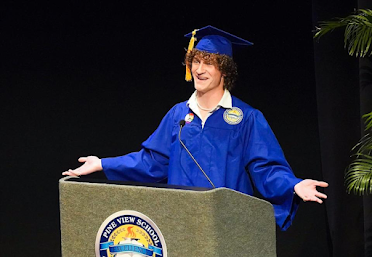
Zander Moricz went viral last week for an inspiring graduation speech. In his speech, Zander wanted to talk about being gay to let other students know everyone should be who they want to be. However, Zander goes to school in Florida where a recent law has been passed banning teachers from talking about families that have two mums or two dads. The law is known as the "Don't say gay" bill.

Zander was told by the school that he was not allowed to say the word gay in his speech or reference the fact he is gay. So instead, Zander did a speech about another way he is different; he talked about his curly hair.

In his speech, Zander says, "I used to hate my curls. I spent mornings and nights embarrassed of them trying desperately to straighten this part of who I am. But the daily damage of trying to fix myself became too much to do. I decided to be proud of who I was and started coming to school as my authentic self."

Zander thanked his teachers at Pine View School who he said supported him. He said he talked to them first because he didn't have other curly haired people to talk to. 

"Noe I'm happy. And that is what is at stake. There are going to be so many kids with curly hair who need a community like Pine View and they won't have one. Instead they'll try to fix themselves so they can exist in Florida's humid climate."

- what is graduation?
- why do you think Zander wanted to talk about being gay in his speech? 
- Why do you think the school told him not do mention being gay?
- How do you think that decision made Zander feel?
- why did Zander talk about curly hair instead?
- "I used to hate my curls. I spent mornings and nights embarrassed of them trying desperately to straighten this part of who I am." What is Zander talking about here?
- why was trying to "fix" himself causing daily damage?
- how do you think Zander came to realise it was ok to "have curls"?
- "I decided to be proud of who I was and started coming to school as my authentic self." what does this mean?
- What can we do about Florida's "Don't say gay" bill?
- what can we learn from Zander?
- why is this about No Outsiders?


www.no-outsiders.com