Saturday, 26 October 2019

hijab huddle

Image result for football players huddle hijab
https://www.independent.co.uk/sport/football/news/football-hijab-women-soccer-jordan-shabab-al-urdon-club-amman-club-a9170286.html?fbclid=IwAR1UZKUqWCTd019I1CLug29gfurMjXlRU2Us89b39hTilZEysK685CB1ebU

A football match in Jordan was stopped mid-game when the hijab slipped of the head of one of the players. Instead of playing on, the opposing team (who were not wearing hijabs) stopped to surround their opponent so she could fix her hijab before playing on, They made a protective huddle around her for 30 seconds.

A video of the incident has been shared online over 4 million times and people across the world are praising the team for their humanity.

Until 2014 women Fifa did not allow player to wear hijabs but the ban was overturned and the first hijab was worn in a Fifa match in October 2016.

What do you see in the picture?
where is it?
What is happening?

Explain the story

- what is a hijab? (a hijab is a head covering that some Muslim women choose to wear in public)
- why is the football player wearing a hijab during the match (because the match is in public and she chooses to)
- when the hijab slipped off how do you think the football player felt?
- why didn't the opposing team take advantage and tackle her while she fixed her hijab?
- why huddle around her?
- we can see in the picture that the opposing team are not wearing hijabs, so why worry about protecting someone who is?
- how do you think the player felt when the opposing team huddled around  her?
- Fifa used to ban the hijab on the field; why do you think they changed their mind?
- what does this show about ideas and traditions? (they can change)
- why has this story gone viral? What does this show about how people around the world feel about diversity and difference?
- Why is this story about No Outsiders?

No Outsiders in our school: Teaching the equality act in primary schools by Andrew Moffat

Reclaiming radical ideas in schools: Preparing young children for life in modern Britain by Andrew Moffat

Saturday, 19 October 2019

different arms

Image result for carson pickett joseph tidd
https://www.washingtonpost.com/lifestyle/2019/07/24/boy-with-one-hand-met-soccer-player-with-same-limb-difference-photo-went-viral/

Joseph Tidd is a one year old soccer fan living in  Florida. Carson Pickett is a soccer player and the two have something else in common; they both have a different left arm.

When Carson heard Joseph's family cheering her on at a match, she ran over and repeatedly touched Joseph's arm with hers. It took a minute for Joseph to realise they had the same arms, then Joseph shrieked with glee. Joseph's Mum says he spent the whole car ride home looking at his arm and giggling; Mum says this is because "he knew he had a friend."

Mum says Joseph is fine about having a different limb. Kids used to grab his arm to look at it and he was confused about this, but his older sister told him he had a "lucky fin" like the character in the
movie Finding Nemo.

Joseph's parents want other kids with different limbs to know, "although they may do something differently from others, they should take pride in who they are."

What do you see in the picture?
where are they?
how are the two people different and how are they the same?

- In what ways do you think Jospeh is the same as all the children in his class?
- in what way is he different?
- why do some children grab his arm? Are they being nasty?
- how do you think it makes Jospeh feel when children grab his arm?
- why do his sisters call it a lucky fin?
- Joseph's parents could buy him a longer sleeved shirt to hide his arm, why don't they do that?
- why do you think Josesph's family wanted him to meet Carson?
- "It took a minute for Joseph to realise they had the same arms" why didn't he notice straight away?
- why was he so happy?
- how do you think Carson felt?
- Carson is a soccer player- what does this show about disability in sport?
- "although they may do something differently from others, they should take pride in who they are." what does this mean?
- what can we learn from Carson?
- what can we learn from Joseph?
- why is this story about No Outsiders?

No Outsiders in our school: Teaching the Equality Act in primary schools by Andrew Moffat

Reclaiming radical ideas in schools: Preparing young children for life in modern Britain by Andrew Moffat
Sunday, 6 October 2019

inclusive dolls

dolls-1569939693253.jpg
https://megaphone.upworthy.com/p/teacher-hearing-aid-dolls?fbclid=IwAR1eM5rhb3gzxl59vZ4bAEu4OCQUQWOkbnSC-S3mCuvydTUBtrb7f5GIZkc

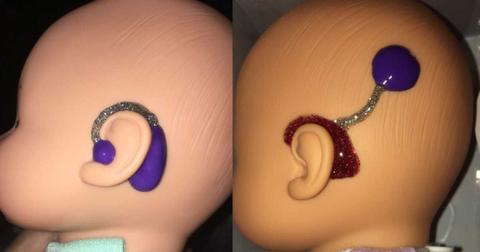
A teacher is adapting dolls so that children who are deaf and hard of hearing can find toys that look like them. Genesis Politron says, "I teach pre-school and kindergarten for deaf / hard of hearing kids and my students never see toys that resemble their hearing devices (hearing aids / cochlear implants) so I added some to our new baby dolls myself. I wish everyone could see their faces playing with these"

People on twitter are praising the teacher; one said. "It's amazing she's exposing these kids to  knowing it's ok to be differently abled." Another described seeing the faces of her friends' children who were deaf "light up" when they were given dolls with hearing aids.

What do you see in the picture?
what are they?
why might someone put hearing aids on dolls?

- what are dolls for?
- why do children like playing with dolls?
- have you ever seem a doll with a hearing aid? Why do you think we don't see dolls with hearing aids?
- why do you think the teacher chose to do this?
- why do you think her students loved the dolls?
- the teacher has made the hearing aids very colourful - why do you think that is? Why didn't she make them flesh colour?
- are these dolls only for children who are deaf or hard of hearing?
- What does "differently abled" mean?
- in what other ways are we differently abled in our school?
- what can we learn from this teacher?
- why is this story about No Outsiders?

No Outsiders in our school: Teaching the equality act in primary schools by Andrew Moffat

Reclaiming radical ideas in schools: preparing young children for life in modern Britain by Andrew Moffat

-

Sunday, 29 September 2019

shirt

View image on Twitter
https://mymodernmet.com/university-of-tennessee-t-shirt/

https://www.nytimes.com/2019/09/09/us/bullied-student-university-tennesee-shirt.html

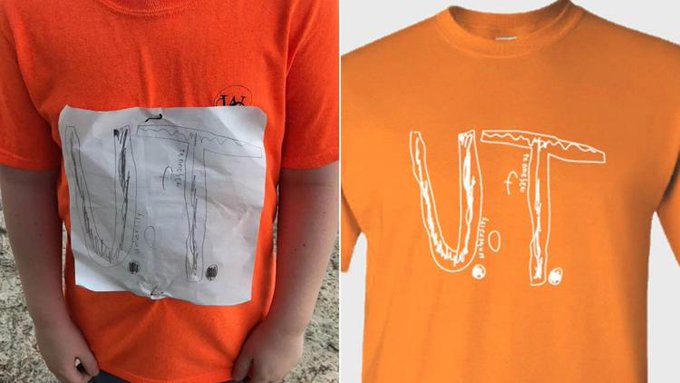
A fourth grader (10 year old) in an elementary school in USA was bullied because he wore a home made shirt supporting a local college. The elementary school held a "college colors day" where pupils are encouraged to wear shirts with the colours of their school; the aim is to show school pride.

The boy did not have a shirt to wear so he made his own, writing UT (University of Tennessee) on a piece of paper and stapling it to the front of his shirt. He was proud of his effort, but some children made fun of the boy because of his home made shirt; his teacher describes how he came in to the class after lunch, sat down at his desk alone and cried.

The teacher shared a picture of the shirt online asking if anyone had a spare UT shirt that they could send to the boy. The University of Tennessee saw the post and decided to create a new college shirt using the boy's design. The shirt quickly became so popular the college website crashed; 50,000 shirts have been sold in a week with proceeds going to a stop bullying charity.

Within a week the University offered the boy a scholarship to their college, covering tuition and fees.  Should he choose to go. he will be have a place at the college in September 2028.

What do you see in the picture
what do you think UT stands for?
what might the story be about?

explain the story

- why do you think schools hold College Colors day?
- how do you think the boy felt when he realised he might be the only child without a college shirt?
- how do you think the boy felt when he had the idea to design his own shirt?
- why were some children unkind?
- "he sat down at his desk and cried" why?
- why did the teacher put the photo online? What was she hoping for?
- how do you think UT felt when they heard the story?
- UT could have just sent a shirt, but they chose to use his design and make a new shirt - why?
- why has the shirt sold 50,000 in a week?
- why are UT sending a portion of proceeds to a stop-bullying  charity?
- Why have UT offered the boy a scholarship?
- what can we learn from the boy?
- What can we learn form the teacher (she chose not to be a bystander; she chose to take action)
- what can we learn from UT?
- why is this story about No Outsiders?

Thank you to the Cheshire West teacher who told me about this wonderful story

No Outsiders in our school: Teaching the equality act in primary school by Andrew Moffat

Reclaiming radical ideas in schools: Preparing young children for life in modern Britain


Saturday, 21 September 2019

Crazy hair day


https://scoop.upworthy.com/young-girl-with-alopecia-wins-crazy-hair-day-at-school-now-i-love-being-bald?fbclid=IwAR0f1vLHj-oC5A7RmToMAGJGP_JnhZ48fY_pBXtBaRmF2ggTdc2zp63Pk6U

Gianessa Wride is 9 years old and lives in Utah USA. When Gianessa was 7 she was diagnosed with alopecia. Alopecia is a condition that causes hair to fall out. A child with alopecia is not poorly, they just look different as most children have hair, but they do not. Lots of people have alopecia all over the world.

Gianessa found living with alopecia difficult at first and her Mum was worried she would be bullied for being different.

Gianessa's school held a 'crazy hair day' but Gianessa does not like wearing wigs and she finds scarves often slide off her head. So Mum decided she wold create a "bald and beautiful" look for her daughter, covering Gianessa's scalp with dozens of little jewels.

Gianessa felt nervous at the start of the day but her class mates at school loved her look and she was awarded first place in the Crazy Hair Day competition. Mum said sticking the jewels on Gianessa's head, "adds some fun to what could be a stressful time for a girl with no hair. It's my hope that she will continue to want to be herself and express herself in any way she feels comfortable as she grows older."

Gianessa says she was sad at first when she lost her hair, "But now I love being bald. I can do things to my head that other kids can't."

"Your hair doesn't make you who you are - it's what's inside that counts."

What do you see in the picture?
what do you think the story is about?

- what is different about Gianessa?
- in what ways are you similar to Gianessa?
- how do you think Gianessa felt when her hair first fell out?
- why was her mum worried she might get bullied?
- how do you think Gianessa felt at first when she heard there was a Crazy Hair day at school?
- Do you think the Gianessa's school should hold a Crazy Hair Day? What are the arguments for and against the school holding this event?
- why do you think Gianessa's Mum decided to decorate her head?
- Gianessa felt nervous at first when she went to school, why?
- do you think she thought she would win Crazy Hair Day?
- why do you think she won?
- what does the win show us about her school?
- "Your hair doesn't make you who you are" what does Gianessa mean?
- what can we learn from Gianessa?
- what can we learn from Gianessa's school?
- why is this story about No Outsiders?

No Outsiders in our school: Teaching the Equlaity Act in Primary schools by Andrew Moffat

Reclaiming radical ideas in schools: preparing young children for life in modern Britain by Andrew Moffat

Saturday, 14 September 2019

Real inclusion

Image result for marching band inclusion
https://www.upworthy.com/want-to-see-what-inclusion-looks-like-a-high-school-marching-band-sets-the-bar-for-us-all?fbclid=IwAR3186bpYphQK6W68hmjLF13EjA6Wo-Vj2wGQzU2S9d-WpjBFSQUf4ZJwHY

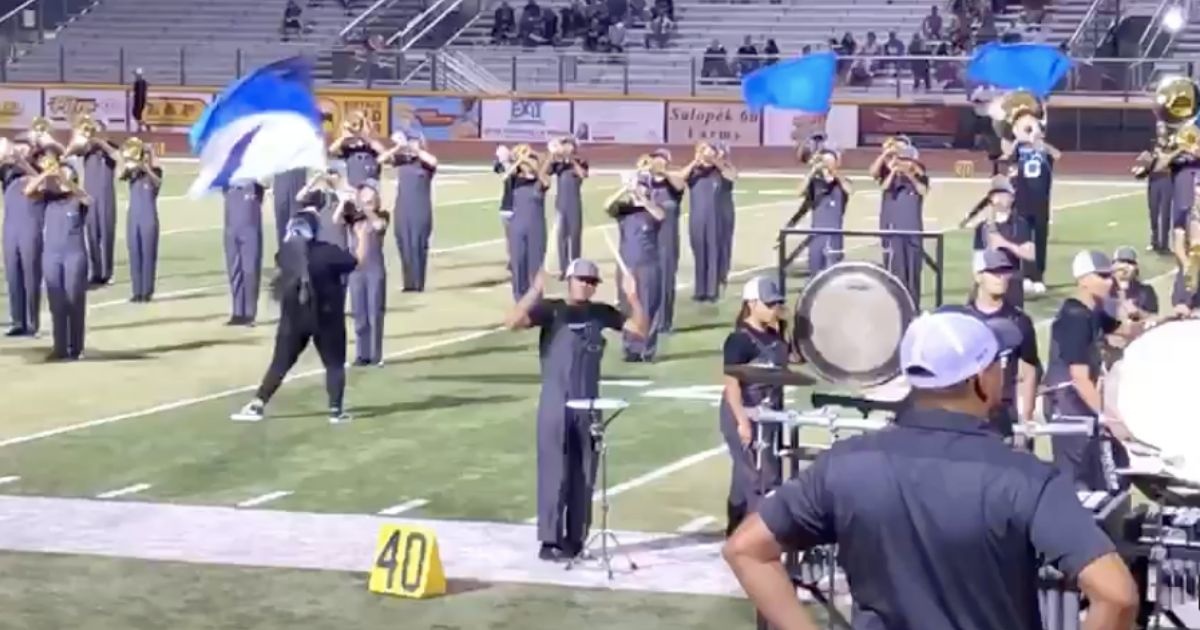
Isaac and Aiden are brothers at a high school in New Mexico, USA. Aiden is part of the school marching band, who perform at competitions and events and when his younger brother Isaac joined the school he wanted him to be part of the marching band too.

Isaac has a disability and rarely joins in the same activities as his brother. Isaac cannot play an instrument and needs constant support so Mum thought he would not be able to join in the marching band. She thought he would be given a job like setting up water bottles or carrying music stands.

Mum went to see the first performance of the year and was astonished to see Isaac not only joining in as part of the band, but also to see him placed up at the front, jamming with his drum pads. Mum could see Isaac was playing out of time and the pads had been muted but it didn't matter, more importantly he was there, at the front, part of the group and loving the experience.

Later the band director thanked Mum for allowing Isaac to be part of the band and Aiden says everyone in the band loves having Isaac as part of the group. Mum shared the story on twitter and it quickly went viral with people commenting this was real inclusion. The website Upworthy defines inclusion as:
"Making accommodations that allow a person to participate in an activity in a way that works for everyone. Often that means getting creative... it means putting compassion and empathy ahead of rigid rules or traditions. When inclusion is done well, everyone wins. In this story Isaac is happy, the band is happy, the band director is happy, Isaac's family are happy."

what do you see in the picture?
where is it?
what's happening?

explain the story

- what is a marching band?
- why do you think Aiden wanted Isaac to be in the band?
- why was Mum worried about Isaac being in the band?
- why did Mum think Isaac would be given a job like carrying water?
- why do you think Isaac enjoys playing the drums?
- the drums are muted so no one can hear what Isaac is playing; why? Is this still inclusive?
- how do you think Isaac feels when he plays with the band?
- How did Mum feel when the band director thanked her for allowing Isaac to play?
- "When inclusion is done well, everyone wins," what does this mean?
- what can we learn from Isaac?
- what can we learn from the band?
- are we inclusive in our school? how?
- why is this a story about No Outsiders?

No Outsiders in our school: teaching the equality act in primary schools by Andrew Moffat

Reclaiming radical ideas in schools: preparing young children for life in modern Britain by Andrew Moffat
Sunday, 8 September 2019

Rainbow flags

Image result for street flies rainbow flags to support neighbour
https://www.bbc.co.uk/news/uk-england-manchester-49436339

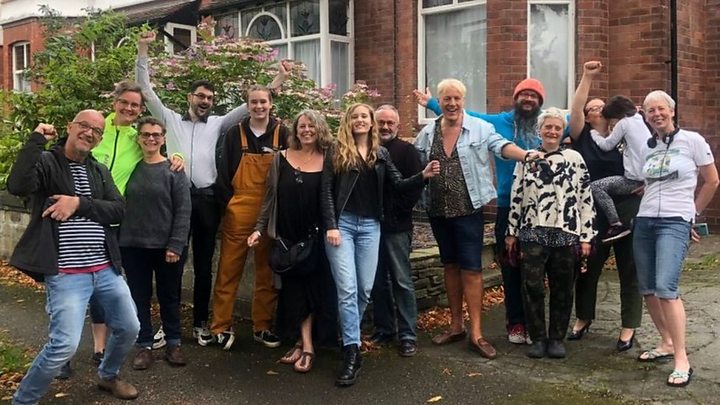
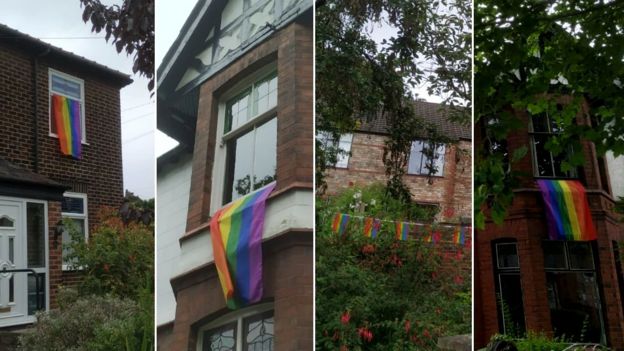
When Alex hung a rainbow flag out of his window to celebrate Pride month, two men shouted and threatened him. The rainbow flag is a well known symbol for the LGBT community. Alex lives in Manchester where every August bank holiday a huge celebration of LGBT Pride is held. Prides are held in cities around the UK to show that they are inclusive places where everyone is welcome.

Alex's neighbours heard about the incident and decided to do something to show Alex belonged in their street. One neighbour bought 30 rainbow flags and all the neighbours hung the flags out of their windows. A neighbour said he was horrified about what happened to Alex; "We can't let this happen, especially in this community. The whole street is going to be decked with flags in support of Alex."

A neighbour said homophobia , "Just isn't acceptable in 2019."
Another neighbour said, "The way the neighbourhood has come together is fantastic. Everybody's got a smile on their face."
Image result for street flies rainbow flags to support neighbour

Show the top picture
What do you see in the picture?
where are they?
why do you think the people are together? How do you think the are related?
How are they feeling?

explain the story then show the second picture

- what is homophobia?
- why do some people behave in a homophobic way? (because they don't understand about no outsiders, they don't understand that it's ok to be different, some people are afraid of  difference.)
- how do you think Alex felt when the two men threatened him?
- what did his neighbours do?
- why did the neighbours hang rainbow flags out of their windows?
- how do you think that action made Alex feel?
- what does this story show about that street in Manchester and the people who live there?
- could this story happen in other cities?
- Alex said when he drove down the street and saw the flags he felt very emotional- why?
- "everybody's got a smile on their face" - why?
- what can we learn from the neighbours in this story?
- why is this story about No Outsiders?

No Outsiders in our school: Teaching the Equality Act in primary schools by Andrew Moffat

Reclaiming radical ideas in schools: Preparing young children for life in modern Britain by Andrew Moffat