Sunday, 10 January 2021

Refugees - NHS


Dr Waheed Arian was born in Kabul, Afghanistan in 1983. His early childhood was dominated by war and his family frequently moved home because of the fighting. Waheed and his family made a 7 day mountain crossing on foot to Pakistan to seek safety, travelling at night to avoid being seen by aircraft. During the crossing they were nearly killed by a rocket attack.

At the refugee camp in Pakistan Waheed and his family of 10 lived in one room with no running water or electricity. Waheed contracted Tuberculosis and was treated by a doctor at the camp. The doctor inspired Waheed to want to become a doctor when he was older. Aged 15 his family sent him to live in England with a distant relative and he was determined to study medicine.

In England Waheed worked in shops in evenings to earn money and went to college during the day. He earned 5 A levels and secured a place at Cambridge University to study medicine but he found life difficult there because he felt he did not fit in. He made friends with the kitchen porter at the University rather than other students. 

After earning a science degree at Cambridge he earned a scholarship in surgery at Harvard University in America and then became a NHS doctor in the UK. He has won many awards for his ongoing humanitarian work. 

Waheed tweeted the above photo this week and wrote, "Coming to UK as a 15 yr old refugee, I couldn't be more proud of ending up fighting Covid 19 on frontline with my healthcare colleagues including thousands of refugees and immigrants. Asylum is a human right, pandemic has also shown we give back. Can we now show compassion to refugees?"

- what is a refugee?
- what is asylum?
- how would you describe Waheed's childhood?
- do you think when Waheed lived in the refugee camp as a child he imagined he would end up being a doctor in the UK? Was that a likely outcome for Waheed? How did that happen? Who made it happen?
- if Waheed had not been granted asylum in the UK aged 15 how would this story be different?
- some people still say refugees are not welcome. Why do some people say that?
- if Waheed was not working in the UK today, how would that affect people living in the UK today and treatment for Covid?
- Waheed mentions his healthcare colleagues "Including thousands of refugees and immigrants" what does that show us about doctors and nurses in the NHS today?
- "Asylum is a human right, pandemic has also shown we give back" what does Waheed mean by this, who is he talking about?
- "Can we now show compassion to refugees?" what does compassion mean? How do we show compassion to refugees today?
- what can we learn from Waheed?
- why is this about No Outsiders?


www.no-outsiders.com


Saturday, 2 January 2021

lorry drivers


https://www.kentonline.co.uk/gravesend/news/hundreds-of-curries-delivered-roadside-to-stranded-truckers-239717/

In the week before Christmas hundreds of lorry drivers were stranded in the UK as they waited to get back to Europe when borders at Dover were closed to stop the spread of coronavirus.

The Sikh community of Gravesend cooked over 800 hot meals and delivered them to the drivers to stop them going hungry. Volunteers met at Gravesend Gurdwara to prepare and deliver the meals within three hours of hearing about the drivers. The volunteers made 500 chickpea curries and 300 mushroom and pasta dishes. 

There is a short video in the link above where you can see the volunteers preparing food. 

- why were lorry drivers stuck in the UK?

- how do you think the drivers felt when they realised they could not get home?

- why do you think the Sikh community decided to cook meals for the drivers?

- how do you think the drivers felt when the meals were delivered?

- why didn't the Sikh community check if the drivers were Sikh before making meals for them?

- as meals were given out do you think anyone checked what country drivers came from? why not?

- what does this show about people who have different faith and nationality today?

-what can we learn from the Sikh community of Gravesend?

- why is this about No Outsiders?

No Outsiders: Everyone different, everyone welcome by Andrew Moffat

www.no-outsiders.com

Saturday, 12 December 2020

Santa


https://www.washingtonpost.com/lifestyle/2020/12/03/black-santa-solidarity/

The Kennedy family live in Arkansas, USA. They put up their Christmas decorations this year, as they do every year, in front of their house. The decorations include a large inflatable Christmas tree and inflatable Santa next to twinkling lights. But this year after a week the family received a letter saying they should take the Santa down. The letter claimed to be from Santa and said, "I am a white man to you and have been for the last 600 years." At the end of the letter the writer suggested the family move to a different neighbourhood.

The family wondered if they had made the right choice and if they should move. They shared the letter on social media  but they were immediately deluged with messages of support from their neighbours. What do you think the neighbours did next? Slowly, one by one, Black Santas started appearing all over the neighbourhood. 
   

One of the first people to put up a Black Santa was 70 year old Chip Welch. Chip said the letter was, "not reflective of the kind of country I want to live in. We were all pretty concerned about it and we decided it would be poetic for everyone to get Black Santa's."

Will and Paula Jones live across the street and have put up a Black Santa. Paula said when she heard about the letter, "My first thought was, 'Where can I get one?"

Neighbour Ben Keller had a two year old son who is black. Ben says their son is "absolutely thrilled to see some Santa's that reflect back to him."

People have also sent donations to the Kennedy family, who have donated everything to charity. They have received over $1000.


what do you see in the picture?
what do you notice about the Santa?

explain the story 

- why would someone write that letter, what was their aim?
- how do you think the Kennedy family felt when they first read the letter?
- Chip Welch says the letter is "not reflective of the kind of country I want to live in" what does that mean?
- why do you think Paula immediately thought, "Where can I get one"?
- why do you think so many neighbours put up black Santas and shared photos?
- what does this story show about lots of people in America today and their attitude to diversity and difference?
- how do you think the Kennedy family felt when they saw their neighbours' reactions?
- Ben Keller says his Black son is "thrilled to see some Santas that reflect back at him" what does this mean?
- what does representation mean and why is it important today?
- what can we learn from the Kennedy family?
- what can we learn from their neighbours?
- why is this about No Outsiders?


Monday, 7 December 2020

rainbow laces


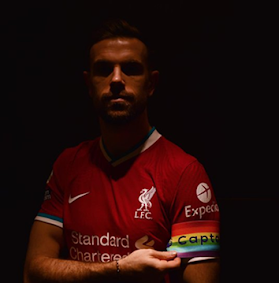
 The photo shows Jordan Henderson, Captain of Liverpool football team. Last Sunday James wore a rainbow armband while leading his team in a match against Wolves at Anfield.

Jordan said, “Football is a game for everyone. No matter what”

After the match, Liverpool fan Keith Spooner contacted Jordan on twitter to say, “At 17 I came out, I struggled through my teenage years but the one thing that always made me feel at home was Liverpool. Seeing this means the world to me, it truly does!”

Jordan responded with, “If wearing a rainbow laces arm band helps even just one person, then it’s progress. Everyone is welcome at Liverpool Football Club.”

- What are the armbands and laces for?

•        -  What does LGBT mean?

•        -  Do you have to be gay to wear the laces and armbands?

•        -  Why are people who are not gay wearing them?

•        -  What does ‘come out’ mean? Why did Keith Spooner say he struggled through his teenage years?

•        -  Why does it mean “the world” to Keith to see the captain wear a rainbow armband today?

•         -  What can we learn from these footballers?

•         - Why is this about No Outsiders?


Sunday, 6 December 2020

racist responses


https://www.bbc.co.uk/sport/football/55168557

The photo shows Derby County player Colin Kazim-Richards raising his first as players on his team take the knee at a match against Millwall on Saturday. Players wanted to show respect to the Black Lives Matters campaign before the match.

When players took the knee, some of the Millwall fans in the crowd started to boo. 

The incident made national news and thousand of people expressed anger at the lack of respect shown by some football fans. 

Derby boss Wayne Rooney said is was, "disappointing and upsetting to hear booing from supporters." He said he was pleased with how his team dealt with the incident, "They've had to put that to the back of their minds for the 90 minutes but I'm sure it's something they were thinking about."

The Environment secretary George Eustace responded to the booing by saying people's views should be respected; "if people choose to reflect their view in a particular way that should always be respected."

However, Derby centre forward Colin Kazim Richards said the incident was "an absolute disgrace."
"This is why I stand and stand proud and I have to say every single person involved with @dcfofficial did too made me proud to wear this shirt today"

The FA  said, "We applaud the players for taking a stand and defying the hate shown today."

what do you see in the photo?
where is it taken?
what is happening?

explain the story

- what is taking the knee about? why are people choosing to do it?
- why is Colin Kazim Richards remaining standing with his fist in the air?
- what do you notice about the three players in the photo taking the knee?
- black and white players choosing to show support for Black Lives Matter together - what does this show about football players today and respect for diversity? 
- why did some fans in the crowd boo? (because some people still don't understand about diversity and difference; they weren't lucky enough to go to a school like ours where we talk about being different and show respect for each other. Some people think we should all be the same - same skin, same religion, same kind of person. It's the opposite to us - we know it's great to be different and we like it that way. We are not frightened about diversity and equality)
- how do you think the players felt when they heard the boos?
- what do you think of the different reactions; "disappointed"; "saddened"; "a disgrace;" was it "disappointing"? Is that word strong enough? Which reaction do you think is most applicable here?
- one person said we should respect the views of the people booing. What the arguments for and against that view? 
- The boss of the team said he was pleased with how his team dealt with it - putting it to the back of their minds and playing on. What do you think about that advice? Are the players being asked to ignore racism and carry on? Should we ignore racist behaviour when we see it?
- What can we do about this today? How do we stop this happening in the future? (we stop this by making sure everyone knows in our school we respect diversity and we welcome difference. If we hear a racist comment, or a homophobic comment or any comment that is discriminatory, we challenge it)
- what do we say at our school about racism?
- why is this about no outsiders?


Sunday, 29 November 2020

baseball


https://www.goodnewsnetwork.org/kim-ng-named-first-female-gm-in-baseball-history/

Kim Ng (Pronounced Eng) has become the first woman to be hired as a manager in a professional league baseball club in America. She is also the first Asian – American to manage a team.

Watch this short news clip about Kim’s appointment https://www.youtube.com/watch?v=bZ8fcDvFAj0

Kim has worked for 30 years in different baseball clubs; she has been Assisant General Manager with the New York Yankees and Assistant General Manager for the Los Angeles Dodgers.

Commissioner for baseball Robert Manfred Jnr said, “Kim’s appointment makes history in all of professional sports and sets a significant example for the millions of women and girls who love baseball and softball.”

Kim said, “When I got in to this business it seemed unlikely that a women would lead a major team, but I’m dogged in pursuit of my goals.”

Many people have praised Kim; one person said, “All it takes is one and then it opens the door for somebody.”

-        Why has this story made news?

-        Why do you think Kym is first women to manage a major league baseball team?

-        Kim started as an intern. What’s an intern?

-        “When I got in to this business it seemed unlikely that a women would lead a major team,” why?

-        “I’m dogged in pursuit of my goals” what does this mean?

-        Kim “sets a significant example for the millions of women and girls who love baseball and softball.” Why?

-        “All it takes is one and then it opens the door for somebody.”

-        What does this show about ideas and the world today (ideas can change, the world is changing)

-        What can we learn from Kim?

-        Why is this about No Outsiders?


Sunday, 22 November 2020

community


https://www.washingtonpost.com/lifestyle/2020/11/13/wurstbar-jersey-barber-covid/

Wustbar is a bar in New Jersey, USA, owned by Aaron Khan. Last week a member of staff was diagnosed with coronavirus so to be safe, Aaron decided to ask all of his staff to isolate and get tested. He shared a message on Instagram saying they were closing the bar. Aaron was booked for a haircut that afternoon at the barber shop two doors down from his bar and he rang the owner, Andre Fersa, to tell him what had happened and cancel his appointment.

Andre had an idea. He offered to work at Aaron’s bar over the weekend to keep it open and he brought a friend with him to help. They refused to accept payment for their work and gave all their tips ($300) to the workers at the bar who were isolating. Andre said he could relate to Aaron’s situation because at the start of lockdown earlier in the year he had to close his barber shop for three months. He got by on savings, but it was difficult. Aaron says he will never forget Andre’s kindness.

The Wutstbar staff posted on social media after the weekend, “We love this community and couldn’t ask for better neighbours.”

-        Why did Aaron close his bar when only one of his staff had coronavirus?

-        Why do you think Andre offered to help out?

-        Why didn’t Andre and his friend accept payment for their work?

-        Why did they give all their tips to the usual bar staff who weren’t working?

-        What is a community?

-        What does this show us about how coronavirus is affecting communities?

-        What can we learn from Andre Fersa?

-        If Andre needs help in the future, who do you think might step in to help? Why?

-        What is the impact of a good deed or an act of kindness?

Why is this about community cohesion?