Sunday, 22 January 2023

What is homophobia?


Before telling the story, ask what's happening in the picture, who is Eubank Jnr, what's that on his arm, what's going on here?
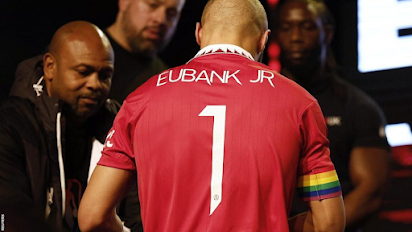
Boxer Chris Eubank Jnr chose to wear a rainbow armband this week after a press conference where his opponent, Liam Smith, used language that many argued was homophobic.

During the press conference, Liam Smith repeatedly asked Chris Eubank Jnr why no one had seen him "with a girl" and said, "have you got something to tell us?".  He later added, "I'm not that type of way, mate, I like women."

Chris Eubank Jnr replied, "My private life is my private life. It's irrelevant to boxing. But I'm happy, I'm comfortable." 

The next day at the weigh-in, Chris Eubank Jnr wore a rainbow armband and said, "Liam disrespected and hurt and alienated a whole group of people. That is unacceptable. We don't want that in boxing. We want to be all inclusive in this sport."

Liam Smith later apologised to anyone who was offended and added "not one homophobic thing" came out of his mouth.

- what is homophobia?
- "Why has no one seen you with a girl, have you got something to tell us? I'm not that type of way, mate, I like women" why are people arguing this is homophobic?
- Why do you think Liam Smith chose to use this language? 
- Liam Smith says "not one homophobic thing" came out of his mouth. Do you agree? Why/ why not?
- "My private life is my private life. It's irrelevant to boxing. But I'm happy, I'm comfortable." Why did Chris Eubank Jnr choose to respond in this way. he cold have said, "I'm not gay," or he could have said, "I am gay," but instead he chose to say, "I am comfortable" - why? 
- what does the language used in this conversation suggest about both players?
- "Liam disrespected and hurt and alienated a whole group of people." do you agree? Explain.
- Why do you think Chris Eubank Jnr wore a rainbow armband the next day?
- By wearing the armband, is Chris giving a signal that he is gay? (no, he is giving a signal that he supports LGBTQ+ people)
-  "We want to be all inclusive in this sport." What does this mean? 
- Do you think homophobia exists in other sports? Can you think of any examples? What can be done about it?
- What do we say in our school about homophobia? How would you respond if you heard someone use homophobic language at our school?
- What is the law in Britain that protects people who are LGBT? Who else is protected? (The Equality Act 2010 - race, religion, sex, gender reassignment, age, marriage & civil partnership, sexual orientation, disability, pregnancy & maternity))
- At the match on Saturday, Chris Eubank Jnr lost. Chris later tweeted, "Congratulations to Liam tonight." Why did Chris do that? 
- What can we learn from Chris Eubank Jnr?
- Why is this about No Outsiders?


Sunday, 15 January 2023

Hair


Shilah Madison lives in Melbourne, Australia and is 11 years old. Shilah is inspiring thousands of people across the globe by embracing her uniqueness. Shilah has different hair; it's called "uncombable hair syndrome" which means her hair cannot be combed flat, it feels dry and frizzy. 

Ever since she was a baby, Shilah has faced comments about her hair from people in the street and in her school; "I get teased a lot and get called Fluffhead - it's not nice."

"I personally like it now, but at the same time I hate it - especially when there's wind! Let's just say I can't see!"

Shilah'a mother says she knew her baby was different when she was three months old; "Her brown baby hair had fallen out as it should but this weird fuzz started to come through and grow straight up. It was nothing you'd ever seen before! It didn't seen to calm or settle, but I didn't really think anything of it until people started to make comments."

People would say, "What's wrong with her hair?". Mum says it was really hurtful; "People who were complete strangers would peer in to her stroller, stare at her and make comments wherever we went, 'Looks like she stuck her finger in a power socket,' was a frequent comment." Often people would touch her hair without asking. Mum wold say, "Do you mind? She's just a baby and we don't go around touching your kids."

Shilah's frustration peaked when he was four years old and she couldn't pull it back in to a pony tail. Shailah chopped her hair off and it became spiky. That was the only time she had a hair cut. After that, Shilah started to embrace her hair; "Just call me fuzzy. Sometimes I look like a lion with a crazy mane." Shilah started to tell people that she was magical and special and they were just normal and boring."

A doctor said they had never seen anyone in Australia with uncombable hair syndrome and that Shilah was one in a million. Mum says Shilah has the personality to make a difference. Shilah says, "You just have to love yourself, who cares about everyone else."

- What is the impact on Shilah when people tease her?
- Why do you think Shilah is inspiring so many people?
- "I personally like it now, but at the same time I hate it." How can you like something and hate it at the same time?
- Do you think "uncombable hair syndrome" is a helpful name for Shilah to feel accepted? How might that name make Shilah feel about her hair, what message about hair does the name give? Is all hair combable? Can you think of a more sensitive name? How about, "different hair syndrome" (although it still points out difference), How about "free hair syndrome"?
- Mum says she didn't really think anything of her baby looking different until people started to make comments. Why not? Why didn't Mum notice?
- Why would people touch Shilah's hair, why is that a problem?
- Why do you think Shilah wanted a pony tail when she was 4 years old? What does that tell us about gender stereotypes?
- "Shilah started to embrace her hair," what does this mean? What changed?
- Why did she tell people they were normal and boring? Is that a kind thing to say? Is it ok?
- "You just have to love yourself, who cares about everyone else." Why does Shilah say this?
- What can we learn from Shilah?
- Why is this about No Outsiders?


Sunday, 8 January 2023

Bus driver


Ranjit Singh works for National Express in West Bromwich. Ranjit loves his job and recently he made a video to show friends and family living in India what he does and who he works with. The video has been viewed thousands of time and is being praised by other bus drivers. You can watch the video in the link above.

Ranjit says, "I have worked at National Express for 13 years and take great pride in what I do. There's a real team spirit and I wanted to do something that celebrated the many different communities that we have at our West Bromwich depo and how we all work together as one team."

Manager David Bradford says, "Our staff really are our greatest assets."

In the song, Ranjit sings in Punjabi and there are English subtitles. Watch the video and ask the children which lines are about No Outsiders:
"From different countries brothers drive buses together," 
"Sisters also drive buses from different cultures and nations from all over the world."
"All the different countries and nations drive together as friends."
"Working in the offices as brothers, we sit together in the canteen as brothers."
"If any drivers need moral support we give it to each other."
"Other cultures greet us"

- what is National Express?
- Why do you think Ranjit made this video?
- What bits of the video / song suggest Ranjit would agree with us and No Outsiders?
- Why do you think Ranjit chose to sing in Punjabi? Should he have sung this in English?
- Does anyone recognise any of the instruments used and know their names?
- Why do you think Ranjit takes "Pride" in his job? What does that mean?
- Ranjit sings about giving each other moral support - what is that?
-  "Our staff really are our greatest assets." what does this mean? 
- The video shows people with black skin, brown skin and white skin and different gender dancing together. What does this show about workplaces in the UK today?
- What can we learn from Ranjit?
- Why is this about No Outsiders?
- Which British Value is this assembly about?


www.no-outsiders.com


Monday, 2 January 2023

New year


People around the world celebrated the start of 2023 last week, including over 100,000 people in central London who watched a firework display on the banks of the river Thames. This was the first time since the pandemic that people were permitted to join the celebrations.

The theme of the London show was "Love and unity." The display celebrated the Lionesses Euro win and sent a message of support to Ukraine. The display featured a tribute to the Queen and also included a message from King Charles about preserving our planet's future.

There were rainbow fireworks to celebrate 50 years of London Pride and a message from Peter Tatchell from the Gay Liberation Front. Peter was one of the people wo matched on the first London Pride in 1972.

London Mayor Sadiq Khan later posted on social media a picture of the rainbow fireworks and tweeted, "Here in London you are free to be whoever you want to be and love whoever you want to love." 

- why do so many people celebrate new year in this way?
- Has anything actually changed when the clock ticks from 11:59 and 59 seconds to 12:00 on January 1st?
- What is the name of the famous song many people sing at new year? do you know what it is about?
Should auld acquaintance be forgot, And never brought to mind?
Should auld acquaintance be forgot, And days of auld lang syne? (old long since)
For auld lang syne, my dear, For auld lang syne We'll take a cup o' kindness yet For auld lang syne

what does that all mean? 

- What is the gay liberation front? What does liberation mean? 
- Has gay liberation been won today? Everywhere? Do we still need Pride events? what are they for?
- "Love and unity" why choose these words as a theme in 2023?
- Look at Sadiq Khans's words, why did Sadiq choose those words? Sadiq could have just written "Happy new year!" what is Sadiq saying about London today and why?
- what are the two flags Sadiq has included in the tweet
- what can we learn from Sadiq Khan?
- why is this about No Outsiders?


www.no-outsiders.com


Sunday, 11 December 2022

make up


In this Spanish Christmas advert, we see a grandad secretly practice applying make up in the weeks building up to a family meal. We assume he wants to wear the make up, but when the family arrive, the real reason becomes clear. This short film is a fantastic opportunity for older children to discuss gender identity, trans awareness, family support and inclusion.

Watch the film till 1:45 and then discuss:

  • what is Grandad is doing at the start of the film?
  • why is he locking the door and hiding the makeup?
  • how do you think he feel about what he is doing?
  • what look does the shop assistant give him? Why, what are they thinking?
  • what happens at the bus stop
  • what do you think is the story here?

watch the rest of the film and then discuss

  • now what do we realise is happening here?
  • How is Alvaro feeling when Grandad does their makeup?
  • How is Grandad feeling when he does Alvaro's makeup?
  • How do the family react when they see Alvaro with makeup and Grandad?
  • Why does the name Alvaro change to Ana?
  • what is this film about?
  • What law in the UK protects trans people? Which British value is this about?
  • "The magic is not only in Christmas. It is also in all of us" what does that mean?
  • why is this about no outsiders?


www.no-outsiders.com

christmas concert


https://www.today.com/parents/s-n-t-adorable-girl-signs-kindergarten-holiday-concert-deaf-2D11729731

The photo shows Claire, 5 years old and from Florida, USA, signing her Christmas concert for her deaf parents.

The video, which is in the link above, went viral. Claire is very enthusiastic and used animated facial expressions to make sure her parents understand all the words. Claire’s mum commented, “She is  full of personality; that’s the Claire we know.”

Both Claire’s mum and dad were born deaf and they have two children who can hear. Claire and her sister Charlotte have used sign language since birth as well as learning to speak. Mum says sign language is the first language in their home.

“We don’t use our daughter as an interpreter, but if there was something we missed, she would likely relay it to us. Claire used sign language in the play because she was considerate of us and wanted us to understand the lyrics to the song. She was signing to her parents, looking right in to my iPhone because she knew I was recording her.”

There is a KODA community (Kids Of Deaf Adults) or CODA community (Children Of Deaf Adults) who applauded Claire’s signing.

-          What is signing for, who is it for?

-          “We don’t use Claire as an interpreter;” why not?

-          How do you think Claire’s parents felt at the Christmas concert, knowing that everyone else would be hearing it?

-          If Claire’s parents can’t hear the concert, why are they going?

-          Why did Claire choose to sign the whole concert?

-          Why do you think Claire is using such animated facial expressions?

-          Is there anything the school cold have done to make the concert more inclusive?

-          Should the school be more inclusive? After all, there are only two parents who are deaf, does it really matter?

-          If the school had a signer, how would that make Claire’s parents feel, what message would that give?

-          What can we learn from Claire?

-          Is there any advice you would give to the school?

       Why is this about No Outsiders? 

        No Outsiders: Everyone different, everyone welcome by Andrew Moffat


Hedgehog


https://www.youtube.com/watch?v=Icx7hBWeULM

Watch the short video in the link above, it's the Erste Christmas ad from 2018 and shows a hedgehog struggling to make friends because of his prickles. At the end of the film the other animals give him a present of foam pieces to stick all over his prickles so that they can hug him.

In KS1/ lower KS2 this provides an opportunity to talk about inclusion, empathy, problem solving, friend ship and difference. I have added some some questions for upper KS2 which question the message of the video which one could argue is that the other animals ask hedgehog to change to fit their needs... this will make a great debate.

- What do you see in the picture, what’s happened, who is hedgehog looking at, what is the story here?

-          - Why does Hedgehog feel like an outsider?

-          - What is going wrong?   

-          - In the film you can see sometimes the other animals wave at Hedgehog and sometimes they don’t. How do you think the other animals feel about Hedgehog?

-          - How does Hedgehog think the other animals feel about him? Why? 

-          - Why doesn’t Hedgehog get a push on the swing? How do you think the animal feels when they don’t push hedgehog?

-          - On the bus we see Hedgehog suddenly get really cold – what is happening here? Has the heating on the bus suddenly gone off?

-          - Who is making Hedgehog an outsider at the start of the film? (This is debatable – you could argue that hedgehog is making himself an outsider; while he can’t change his prickles, he knows they present a challenge for others. We don’t see Hedgehog attempting to do anything about this... but you could also argue, should he have to change?)

-         - When hedgehog sees the animals whispering, what is he thinking?

-         - The present from the animals – what’s it about?

-          - What is the first thing everyone does when Hedgehog puts the foam on – why, how does that make Hedgehog feel?

-          - What can we learn from Hedgehog?

-          - What can we learn from the other animals?

-          - Why is this about No Outsiders?

KS2 extra question: what is the message in this film? Does the film suggest that Hedgehog has to change to be accepted? Is it Hedgehog’s responsibility to adapt or is it the responsibility of those around Hedgehog to adapt? What’s the message in this film – does Hedgehog have to change?

No Outsiders: Everyone different, everyone welcome by Andrew Moffat

www.no-outsiders.com