Sunday, 4 March 2018

Thomas the goose


http://www.bbc.co.uk/news/world-asia-43054363

Thomas the goose died on February 6th 2018 aged 40 years. Thomas was famous throughout New Zealand; he became a symbol for diversity and different families across the world.

In 1990 a white swan named Thomas met a black swan named Henrietta who flew in to Waimanu Lagoon, an estuary on the coast of New Zealand. Thomas and Henrietta formed a bond and nested together for 18 years. However, in 1998 a young female swan entered the lagoon and was often seen with Henrietta. Before long, to everyone's shock the female swan laid an egg. For 18 years everyone had assumed Henrietta the black swan was a female swan, but it turns out she was male. Thomas and the black swan has been in a happy gay relationship for 18 years. Henrietta was renamed Henry and the new female swan was named Henrietta.

Thomas became jealous of the female swan Henrietta, and showed aggressive behaviour towards the couple. But everything changed when their chicks were born; Thomas took to the babies and joined the family, helping them to grow. Henry and Henrietta went on to have 68 cygnets over the next 6 years and Thomas stayed with them, helping to raise the swans, teaching them to fly and taking care of them when their parents did not.

Thomas became famous and tourists came from across the world to watch him help the cygnets to grow and follow Henry and Henrietta around.

In 2009 Henry the black swan died of old age and Henrietta found a new partner. After a while Thomas found a new female partner and had 10 chicks of his own. His eyesight began to fail and by 2013 Thomas was blind; he was moved to a bird sanctuary where he was cared for for the rest of his life.

A memorial was held for Thomas the goose and it was decided to bury him next to Henry the black swan. An epitaph by New Zealand performer Pinky Agnew has been written on a plaque in tribute to Thomas:
Here lies Thomas, the great-hearted goose,
Nestled near Henry in their final roost,
Here where they raised young and found sanctuary,
Somewhere above us these great souls fly free.

What do you see in the picture?
What do you notice about the animals (similarities, differences)

Explain the story

- Why do you think Thomas the goose became famous?
- What does this story demonstrate about families? (families can be different, families can change)
- What does Thomas's fame show about how people around the world view different families?
- Some people say Thomas is bisexual; what does this mean? (definition from Stonewall 'Getting started' toolkit: "Bisexual is a word to describe someone who falls in love with, or wants to have a relationship or partnership with someone of the same gender as them or with someone of a different gender to them. A bisexual person might say that the gender of the person they fall in love with doesn’t matter to them.")
- Why does the epitaph call Thomas 'great-hearted'?
- What can we learn from Thomas the goose?
- What can we learn from New Zealand and their reaction to Thomas the goose?
- Why is this story about No Outsiders?

No Outsiders in our school: Teaching the Equality Act in Primary Schools by Andrew Moffat

Reclaiming radical ideas in schools: Preparing young children for life in modern Britain by Andrew Moffat 


Saturday, 3 March 2018

Olympic ski story


The cross country skiing event at the Winter Olympics 2018 was won by Dario Cologna of Switzerland but the race became famous for the people who came in last, 23 minutes later.

Finishing in 114th place, 3rd from last, seen here in the picture was Pita Taufatofua from Tongo, who had never seen snow a year ago. Pita practised on roller skis and his first time on snow was only 12 weeks ago. Pita said his aim in the event was to finish before the lights went out and avoid skiing in  to a tree.

Pita then waited at the finish line with other competitors from Colombia, Morocco and Portugal for the person who came in last; German Madrasgo from Mexico who came 116th. As German crossed the line he was greeted with huge cheers and was hoisted up on the shoulders of his competitors while he waved his flag. German only started skiing last year. This picture quickly went viral around the world.

As he was interviewed later, Pita Taufatofua said, "I'd rather be finishing towards the end of the pack with all my friends than in the middle by myself. We fought together, we finished together."

What do you see in the picture?
Where do you think the picture was taken and what is happening?
Say the picture was taken at the finish line of a race. Who do you think the people are?

Explain the story

- Why are they smiling and cheering?
- The man on their shoulders came last; why is he celebrating?
- Why did Pita and other competitors wait for German?
- The three men in the picture are all different nationalities and may have different language, faith, culture; what does this demonstrate about different people? (we have things that unite us)
- Why did the picture go viral?
- Why didn't a picture of the person who won the race go viral? What does this show about people around the world?
- What can we learn from Pita and German?
- Why is this story about No Outsiders? 


Saturday, 24 February 2018

Crisps & gender equality


Makers of Doritos crisps have announced they are making a special new brand of crisps for women. The brand thinks currently the crunch is too loud for women and also that women don't like flavour being left on their fingers. The new crisps will have a quieter crunch, and be smaller in size so that they can fit in to a handbag.

The company believe women don't want to lick their fingers when they have finished a bag of crisps; "Young guys lick their fingers with great glee and when they reach the bottom of the bag, they pour the little broken pieces in to their mouth... women would love to do the same but they don't. They don't like to crunch too loudly in public. And they don't lick their fingers generously and they don't like to pour the little broken pieces and the flavour in to their mouth."

Many people have responded to this news on twitter:

Katerina said; "This is the dumbest thing ever. Why can't women eat normal Doritos? They're not for men!"

Monique Jaques said, "We asked for equal pay. We didn't ask for this"

Laura Reinhold said, "Am I the only woman out there who enjoys a Doritos crunch and flavour goodness?"

What do you see in the picture?
What do you think this story is about?

Explain the story?

- Some people might prefer a quieter crunch and some people might not want to lick their fingers, so what's wrong with Doritos announcing they are making a different kind of crisp for those people? (because Doritos have suggested these changes are only for women. It suggests women and men eat crisps differently and need to be sold different crisps. It suggests all men like a loud crunch and licking their fingers and it also suggests all women carry handbags (and not men)
- What is gender equality?
- What does this story tell us about how Doritos understand gender equality?
- Why are many people angry about this story?
- Why does Monique say "We asked for equal pay. We didn't ask for this"? 
- What does the Equality Act 2010 say about gender?
- What other groups of people are mentioned in the Equality Act?
- What could Doritos learn from the reaction to their announcement?
- What does the reaction around the world show about how many people understand gender equality?
- What message would you give to Doritos?
- Why is this story about No Outsiders?

No Outsiders in our school: Teaching the Equality Act in Primary Schools by Andrew Moffat

Reclaiming radical ideas in schools: Preparing young children for life in modern Britain by Andrew Moffat




champion disability


River Island are celebrating their 30 year anniversary by celebrating diversity with a new campaign fronted by 6 children with disabilities. They are spreading the message, "Labels are for clothes, not for kids".

Zebedee management is an agency working with diverse models. They say, "We hope that other brands will follow the example set by River Island and ensure that their campaigns are more representative of our diverse society."

11 year old Joseph Hale is one of the models; Joseph is diagnosed with dyspraxia and global development delay as well as Downs' syndrome. Joseph says, "It's good to be able to champion disabilities."

What do you see in the picture?
Where might you see a photo like this, what do you think the photo was taken for?

Explain the story

- What does River island sell?
- Why do shops have large photos like this in stores? What are they for?
- What is the purpose of this photo? (to sell clothes and also to champion diversity)
- Why didn't the photographer take the photo from a different angle so the frame was hidden?
- What does this show about the photographer and River Island?
- What does "labels are for clothes not for kids" mean?
- How do you think the model in the photo feels about being a model and being different? (proud)
- What does "representative of our diverse society" mean?
- Why does Joseph say it's good to "champion disabilities"? What does he mean?
- What can we learn from the model in the photo?
- What can we learn from River island?
- Why is this story about No Outsiders?

No Outsiders in our school: teaching the Equality Act in Primary Schools by Andrew Moffat

Reclaiming radical ideas in schools: Preparing young children for life in modern Britain by Andrew Moffat


Sunday, 18 February 2018

Age-relationships


http://www.huffingtonpost.co.uk/entry/late-wife-pranks-husband-plant_us_5a609e8be4b01f3bca58cd9b

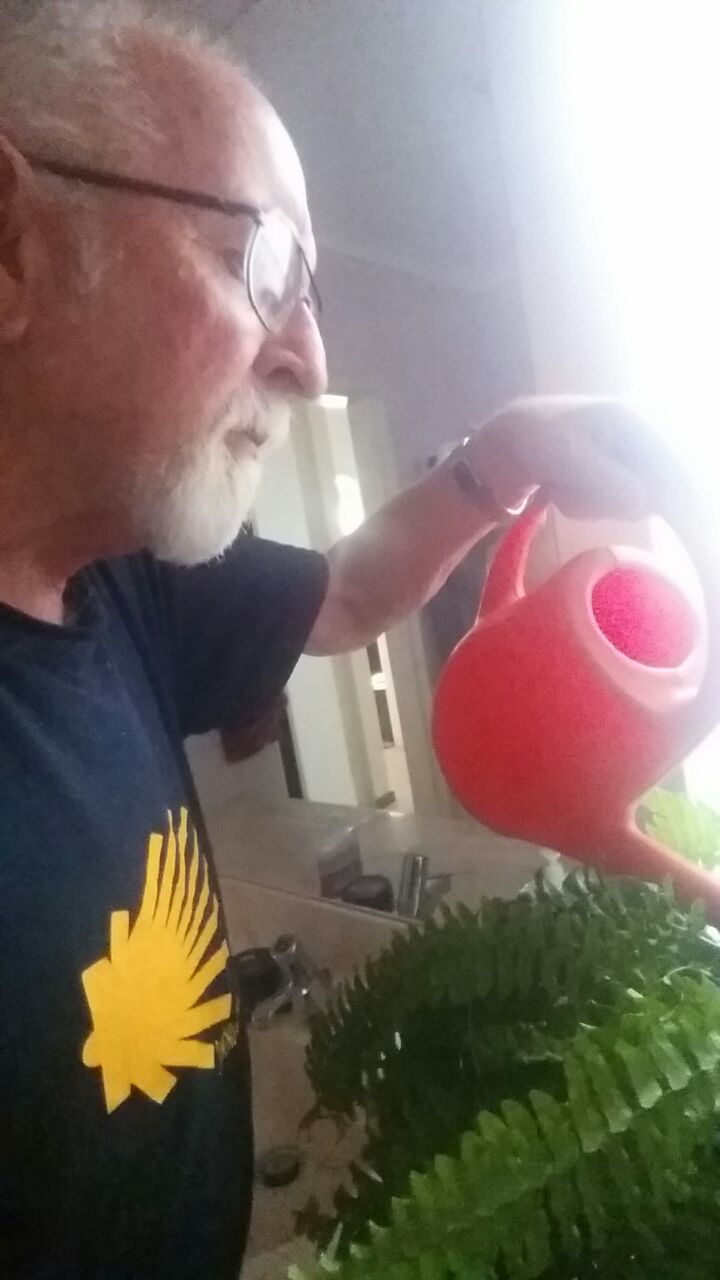
Nigel and Phedre met when they were both 16 years old and later got married and had children. When Phedre was 69 she died and she left her husband instructions to keep watering the plants in the bathroom when she was gone. Nigel faithfully watered the plants for five years until his children helped him move in to a retirement home, and the truth about the plants was discovered; they were made of plastic.

Nigel and Phedre's daughter Nicol said, "It was only when we flew over to help him move we realised the plants were plastic. He said, 'I wondered why they still looked so good!'."

"We really laughed about it and it was lovely to think that my mum was still there with us.... it would have tickled her to know he'd actually done it."

Nicol said watering the plants gave her father something to do, but he did wonder why there were often puddles on the bathroom floor. He thought the toilet was leaking.

Nicol shared the story on twitter and it quickly went viral. People shared their own stories about lost loved ones and remarked on the wonderful sense of humour Nicol's mum must have had.

What do you see in the picture?
What do you notice about the person in the photo?

Explain the story

Each time Nigel watered the plants, what do you think he thought about?
Why did Nigel keep watering the plants?
Why do you think Phedre asked Nigel to water the plants even though she knew they were plastic?
Why does Nicol say they laughed and 'it was 'lovely to think my mum was still there with us" what does she mean?
What does this show about the relationship between Nigel and Phedre?
What does this show about relationships and love and age?
Why do you think the story went viral? What does this show about people around the world regardless of race, faith, gender?
What does the Equality Act 2010 say about age?
What things might you have in common with Nigel? (the aim here is for children to relate to a person despite differences in age; we don't know much about Nigel from this story but we know he cares about plants, he might like football or ballet or eating chocolate or reading or watching cartoons: there are things we will have in common with Nigel)
Why is this story about No Outsiders? (Nigel's age does not stop him living a full life; he has a sense of humour; we have things in common)

"No Outsiders in our school: teaching the Equality Act in primary schools" by Andrew Moffat

"Reclaiming radical ideas in schools: Preparing young children for life in modern Britain" by Andrew Moffat

equalitiesprimary.com


Saturday, 10 February 2018

Gender national anthem


Canada has changed the words of their national anthem to make sure everyone is included. A group of women started a campaign in 1997 and this week the words have officially changed.

The first line of the national anthem was:

O Canada! Our home and native land!
True patriot love in all thy sons command!

Frances Wright led a campaign group to honour women who fought for equality in the 1920s and at many events the national anthem would be sung. Frances realised that gender equality was missing from her national anthem, and many others agreed; at girl guide events fathers would complain afterwards about singing the anthem; "They'd come up to me and say things like, "I have a son and a daughter but in the anthem I only get to song about my son."

Frances and many other women decided to campaign for a change of one line in the national anthem; for "all thy sons command" to "all of us command". At the end of January 2018 Senate passed a bill to accept the change.

When the campaign started Frances found getting support difficult. Many people argued against the change. Senator Nancy Ruth previously campaigned for a change but when the then prime minister planned to announce the change he received 35,000 emails of complaint so the plan was dropped. Frances knew a change would take time; "We were changing a national anthem, a song that - what- 36 million people sing on a  regular basis and is heard around the world. You can't just do it on a whim, we realised it'd take some time."

Senator Frances Lankin says, "I want to live in a world where the opportunities are open from day one. Will this bill make that happen? No. But will my great grand-daughter ever have to ask me, "Why is it only sons? Why don't we talk about daughters?" Not any more."

What do you see in the picture?
Which country's flag?
What do you notice about the people in the photo?
What does this photo suggest about this country?

Explain the story

- What is a national anthem for? When is it performed?
- When do you think this national anthem was written?
- Why do you think the original line of the song only mentions sons?
- Why do some people want the line changed to "all of us"?
- The campaign has taken 20 years to succeed; why do you think it has taken so long?
- What does this show about tradition and ideas and change?
- What can we learn from Frances Wright?
- What can we learn from Canada?
- Why is this story about No Outsiders?

No Outsiders in our school: Teaching the Equality Act in Primary Schools by Andrew Moffat

Reclaiming radical ideas in schools: Preparing young children for life in modern Britain by Andrew Moffat


Sunday, 4 February 2018

signing at concerts

http://www.cbc.ca/radio/q/thursday-may-18-2017-captain-underpants-creator-dav-pilkey-topher-grace-and-more-1.4119614/how-sign-language-interpreter-holly-maniatty-keeps-music-accessible-1.4119825

Holly Maniatty attends many music concerts, but not as a member of the audience. Clips of Holly's contributions to concerts have gone viral as people around the world admire her work, particularly for signing at hip hop concerts. She has signed for Wu Tang Clan and Snoop Dog.

Holly says she was very excited to interpret for Snoop Dog; "We had four of five deaf patrons in there and they were just loving the show." Holly is known for bouncing and dancing along when she signs; "As an interpreter you want to embody what's happening in terms of the music and the vibe and to be all of that so it becomes visually accessible to the people you are interpreting for."

Holly says she is happy clips of her have gone viral because it opens peoples minds; "Any time a deaf person wants to go to a music festival or concert by a specific artist it should be available and I was really psyched that it gets the message out there."

What's happening in the picture?
Where do you think it was taken?

explain the story

- What is signing?
- Why do some acts have signers at their concerts?
- Holly says there were only four or five deaf patrons at the concert, why is she signing for so few people?
- What does this show about the artist and about the concert organisers?
- What does the Equality Act 2010 say about people with disabilities?
- Why does Holly say she wants the concerts to be visually accessible?
- What can we learn from Holly?
- Why is this story about No Outsiders?

No Outsiders in our school: Teaching the Equality Act in Primary Schools by Andrew Moffat

Reclaiming radical ideas in schools: Preparing young children for life in modern Britain by Andrew Moffat