Sunday, 17 September 2023

Roll around the world


When Corey Lee went to his first job interview after college, the manager immediately said he wouldn't be able to do the job because it involved a lot of travel. He thought Corey would not be able to travel because he was a wheelchair user. 

Corey decided to launch his own website about accessible travel to show wheelchair users how to travel easier. Today Corey works as a travel writer and has travelled 41 countries. He travels for 6 months every year and writes and plans his next trio for the next 6 months. He is hoping to inspire others like him to "Roll around the world."

Corey has spinal muscular atrophy and started using a wheelchair when he was 4 years old. He says at school the other kids were confused and asked him lots of questions about his chair.

Corey says he liked travelling to Barcelona best because all the public transport is accessible and there are accessible beaches.

Travelling with  a wheelchair does come with challenges, Corey's advice is:
"Start small and local. Do research ahead of time about accessible bathrooms, taxis, restaurants and hotels. Once you've built up your confidence, take a short flight. And always expect some sort of trouble. Stay positive and you'll have a memorable experience."

He says, "Life has a funny way of working out!"

- why do you think the manager at Corey's job interview said he wouldn't be able to do the job?
- Was he right?
- what law in the UK today means this should not happen in the UK today? (Equality Act 2010 - who else is protected under the Equality Act?)
- Why do some people think a wheelchair user is unable to travel? How would you respond to that assumption?
- Corey could have applied for another job, but instead he started to be a travel writer. Why do you think he did this?
- why does he use the words, "Roll around the world"?
- why did children at school ask Corey about his wheelchair? Is it ok to ask questions?
- what does accessible transport mean? Is public transport accessible where we live? 
- In his advice to other wheelchair users, Corey suggests starting small; what does that mean and why is it good advice?
- Corey says travelling with a wheelchair does come with challenges- what challenges might Corey face and how do you think he overcomes those challenges?
- "Stay positive and you'll have a memorable experience"- explain this
- "Life has a funny way of working out!" what does Corey mean by this?
- what do we say about disability at our school?
- what can we learn from Corey?
- Why is this about No Outsiders?


Friday, 15 September 2023

school uniform


Do you remember what the weather was like last week? It was very hot! 

Joe Stratton goes to school in Surrey and is in Year 11. He asked to wear shorts at school because he was very uncomfortable in long trousers during the hot weather. The school uniform policy was clear that shorts could be worn in the summer term but in September long trousers or skirts had to be worn.

Joe decided he would wear a skirt to school and did for two days, saying he would do the same every time he felt too hot for trousers.

Joe's dad called his son a legend and said, "At first he thought he would be ridiculed. But I told him at the end of the day, you stand up for what you believe in."

Dad said, "Most of the teachers were proud if him for finding a peaceful way to prove his point that didn't hurt anyone."

Joe's school uniform policy gives two options for students in year 7 to year 10: Uniform A (trousers) or Uniform B (skirt).

- why do schools have a uniform?
- are school uniforms a good thing? What are the arguments for and against?
- Do you think Joe had any worries about wearing a skirt to school? Why?
- What is a gender stereotype? Is this story about gender stereotypes?
- why do you think a skirt might be more comfortable to wear in summer than long trousers?
- That's an interesting pose in the photo for Joe to make, why is he standing like that?
- The school uniform policy doesn't actually mention gender, it just says "Uniform A and Uniform B" - why do you think that is?
- what is a gender-neutral uniform policy? 
(You could link to this story about Virgin Airlines who made their uniform gender neutral last year https://no-outsiders-assembly.blogspot.com/2022/11/gendered-uniform.html)
- Is our school uniform gender- neutral? Could it be? What do we say about gender stereotypes here?
- why is this story about No Outsiders?


www.no-outsiders.com


Sunday, 10 September 2023

Being a dad


https://www.upworthy.com/this-daddy-daughter-hair-braiding-class-is-heart-explodingly-adorable-hw

Phillipe is a single dad with a daughter named Emma. Emma has long hair and wants to wear her hair in braids but Dad has never done this to his own hair and no-one ever showed him how to do it, so what do you think he did?

Dad taught himself how to braid hair for his daughter. He got so good at it that he started running classes for other dads who didn't know how to braid hair. He then started a facebook group called Daddy Daughter Hair Factory and built a website where people can learn how to braid properly. 

You can watch Dad and Emma in the short film in the link above. 

Dad says doing his daughters hair is a very small percentage of raising a daughter, less than 1%. He says the real reason he is doing it is to teach her how a man should be in her life. 

"A dad playing tea party, or a dad playing dress up, it's uncommon. But it shouldn't be. We need to have fun and be creative and not worry about what the world thinks about."

Emma says the groups are "pretty cool".

-Who does the hair in your house? 
- why do you think this story made the news?
- Phillipe teaches people to do the three strand braid and the braided elastic cover-up. Do you know what these are? Does anyone know how to do them? (if so, who taught you?)
- The film shows Daddy-daughter classes in states all over the US. What does this show about dads all over the world?
- should mums be allowed in these classes? How would that change the group? Would it be a good thing?
- Let's think about the name Daddy-Daughter. What do you think about this group; is it inclusive? Who is being left out?
- Can sons have long hair and braids too?
- do all mums know how to do braids?
- Why do you think the classes are specifically aimed at dads and daughters? What do you think about that?
- If this was a general braids class for any kids, who do you think would show up? Would dads go? Why not? 
- so is it the right thig to call it dads and daughters, even though you are excluding sons, and also excluding mums who might not know how to braid? (might mums ger support elsewhere? is it easier for a mum to ask for help to braid than a dad?)
- Phillipe wants to teach Emma "how a man should be in her life" what does he mean by this? How should a man be?
- "A dad playing tea party, or a dad playing dress up, it's uncommon. But it shouldn't be. We need to have fun and be creative and not worry about what the world thinks about." what does this mean? Why is it uncommon? Do you agree? s it uncommon?
- What are gender stereotypes?
- what can we learn from Phillipe and from these dads?
- what message would you give to them about boys and being a bit more inclusive?
- why is this about No Outsiders?


Sunday, 3 September 2023

Crying Northestern kid


'Crying Northwestern Kid' used his meme to get into college (upworthy.com)
 
In 2017, John Phillips was 12 years old and living in America. He was caught on camera  while at a game of his football team the Northwestern Wildcats.  During the game, the referee made a call in favour of the opposing team and John’s rection happened to be caught on camera. You can see the footage in this link on youtube (Note: I’m not sure what the word is he mouths near the start… )
 Crying Northwestern Kid After Refs Screw Northwestern With Terrible Call and Technical - YouTube
 
John’s reaction was reported on sports media at the time and very quickly the footage was everywhere. The footage and John became known as “Crying Northwestern kid”
 
 Here is a short interview with John speaking this year about this meme 'Crying Northwestern kid' reflects on viral March Madness moment - YouTube
 
John says at the time his friends were telling him to stay of social media, and he did do that. But over time he learned to accept it and turn it in to something that was unique about him. His year John write about the meme in an application letter to Harvard, one of the top American universities, and he was accepted.
 
John said in his essay that he has learned to love and protect the side of him that is enthusiastic, even if it does sometimes lead to embarrassment; “But today I am proud to be that crying kid with shining braces, exposed rubber bands and thickly gelled hair. Every day I choose to be that kid – for his lively spirit, infectious enthusiasm and compassionate understanding.”

-What is a meme? ( it’s an image, video or piece of text that is shared widely across the internet, often carrying a humorous message. )
- How do you think John felt about the meme back when he was 12 years old? Imagine going to school the next day, what do you think it was like for John?
- Why didn’t John just stop the meme?
- what does this show us about the internet today?
- Why were John’s friends telling him to stay off the internet at the time? What does that show about Johns friends?
- John has ‘learned to love and protect the side of him that is enthusiastic, even if it does sometimes lead to embarrassment’ what does that mean?
- “today I am proud to be that crying kid” How can John be so proud of something so embarrassing (the aim of this question is to get children challenging the assertion that it’s embarrassing)
- “Every day I choose to be that kid – for his lively spirit, infectious enthusiasm and compassionate understanding.” Can you choose to be someone? What does John mean here?
- Harvard is an incredibly prestigious university; why do you think they chose John out of thousands of applicants?
- What can we learn from John as we begin our new school year? 


www.no-outsiders,com

Sunday, 16 July 2023

World Cup


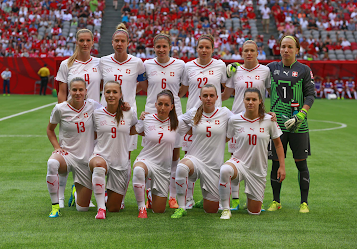
What do you see in the photo? What event is coming up? Which country is this?

The Fifa Women's world cup starts on July 20th.

An advert has been released in Switzerland to announce their players in the women's world cup squad. In England, the women's team are known as The Lionesses, in Switzerland they are known as The Nati. The advert has made the news and people are calling it "perfection", "iconic", "wholesome", "unique".

The ad is in the link above or on youtube here. Before watching it, ask children to consider how they would announce the team in an advert. There is clearly something different about this ad, which is why it is getting so much attention; what do you think Switzerland have done differently? How can you make an announcement interesting? Any guesses what we are about to see? Discuss and feedback.


- "perfection", "iconic", "wholesome", "unique" why do you think these words are being used?
- Someone was given the job of making this advert. They must have pitched the idea and convinced the football league in Switzerland to give them the job. You could argue an advert showing a family sitting around a dinner table has nothing to do with the world cup... how do you think they pitched it? 
- why not have fireworks, balloons, loud music, have the team revealed one by one, running on waving and crowds cheering? Would that not be a better idea for an announcement?
-what do you think the idea behind the advert was? Dad says, "Ahh the Women's team.. does anyone even know them?" Why does he say that? What are they showing about young people and adults, and  attitudes towards football, and gender?
- do you think the advert works? why? (or why not?) 
- what is the point of an advert? (to be noticed) Has this advert been noticed around the world? So has it worked? 
- This advert from France is very clever. Watch it and discuss what is going on here, what were Orange trying to show? What makes this a good advert? https://www.youtube.com/watch?v=QVNZRHIZVL8
- What can we learn from these adverts? 
- Is this about No Outsiders?


football


Start by showing the top picture and asking, what do you see in the picture, what do you think this story is about? Explain Amelia is 10 years old and lives in Merthyr Tydfil in Wales. She has become very good at her favourite sport and here she is with a medal. Ask the children to guess which sport Amelia is good at.

Then show the second picture, what sport do you think it is now? (children may guess football straight away using the top picture; it will be interesting to see whether gender stereotypes still exist and whether football is mentioned as a possibility from children before they see the second picture.)

Amelia loves football and plays for her local team. She practices every night after school so she has become very good. So good in fact, that she has scored 143 goals this season in games across South Wales.

Her coach takes her off the pitch for the second half of every game to give the other players a chance. Amelia has usually scored 10 goals by the end of the first half. 

Amelia's aim is to play for Wales and Liverpool and her role model is Liverpool striker Mo Salah.

- Did children guess that the sport was football after the first picture? If not, ask why children did not guess football, what is a gender stereotype? (if children did guess football, use that to praise the children for their non-judgement and their challenging of gender stereotypes. What are gender stereotypes?)
- Why does Amelia's coach take her off at half time?
- Do you think that is the right decision? What are the arguments for and against this decision?
- How do you think Amelia behaves when she is sent off the pitch? She has done nothing wrong yet she is being sent off! How would you feel? Do you think she argues? Explain your answer?
- What makes this story interesting? Is it interesting because Amelia has scored 143 goals, is it because  Amelia has to be sent off at half time, or it is interesting because Amelia is a girl? Someone decided to make this a news story; why do you think this made the news? 
- What can we learn from Amelia?
- Why is this about No Outsiders?


Sunday, 2 July 2023

Wonder Woman


A photo has gone viral in the last week showing a little boy excited about a new super hero costume given to him by his parents. In the video, a father gives his son the Wonder Woman costume and the boy asks, "Is that a dress?" Dad replies, "It's the dress you like of Wonder Woman." The boy smiles and puts on the dress, saying, "You bought it for me, thank you!" He then hugs and kisses his dad.

The boy then goes to his mum, who is recording the video, and says, "Thank you so much, Mum!" and Mum replies, "You're welcome, my love." The boy then twirls around and shows his parents Wonder Woman poses.


The video gained lots of attention on social media with comments about the way the parents are bringing up their son.

"This is a good reminder to anyone who dresses what society would say is "different|" from their gender. Forced gender roles are not natural. The parents did a great job raising a kid who wants to wear what they want."

"This is a happy kid and these are some good parents."

"This is good parenting. Whether or not you fully understand your children, let them be happy in their own way."

"This is the sweetest thing I've seen all day. Clothes don't have gender. These are very good parents."

- What is Wonder Woman?
- When the boy first opens the costume and holds it up, he asks, "Is that a dress?" Why do you think he asks that, what is he thinking?
- Do clothes have gender? What does that mean?
- The boy sounds surprised that Dad bought the dress for him; why?
- "Is that a dress?" We don't know how old the boy is, but he looks very young. Has the boy learned, even at this age, that clothes have gender? Where has that learning come from?
- Look at his face when he hugs his dad, why is he so happy? Is he happy because of the dress, or is he happy because he is given permission by dad to wear the dress? What's going on here?
- Do you think the parents decided Dad should be the one to give the dress to the boy, rather than Mum? Why do you think they chose to do this? (or maybe it wasn't like that, maybe they never thought about it... what do you think?)
- Mum says, "You're welcome, my love." By choosing those words, what is Mum showing her little boy?
- Why do you think the story went viral?
- why are so many people saying this shows good parenting?
- Is the story about the boy wearing a dress or it is about good parenting? Which is more interesting?
- "Forced gender roles are not natural" What does this mean? Do you agree?
- What can we learn from this boy?
- What can we learn from these parents?
- Why is this about No Outsiders?